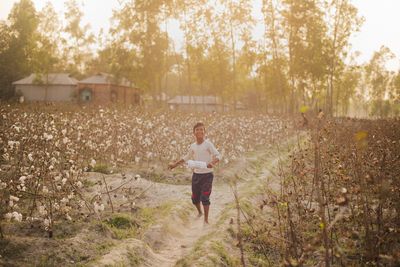
BRAC represents more than words—it symbolizes action, inclusion, and the belief that every person has the power to shape their own future.
When the organization began in 1972, BRAC's full form was "Bangladesh Rehabilitation Assistance Committee"—a name chosen by local volunteers responding to the urgent needs of post-liberation Bangladesh. It reflected a moment in time when the focus was on immediate relief and rebuilding. In 1973, BRAC was renamed “Bangladesh Rural Advancement Committee,” to reflect the shift from short-term relief efforts to long-term focus on nation-building.
As BRAC evolved, its work expanded from short-term recovery to long-term development and social transformation.
In 1992, the acronym was dropped. The organization is known simply as ‘BRAC’ to reflect this broader purpose.
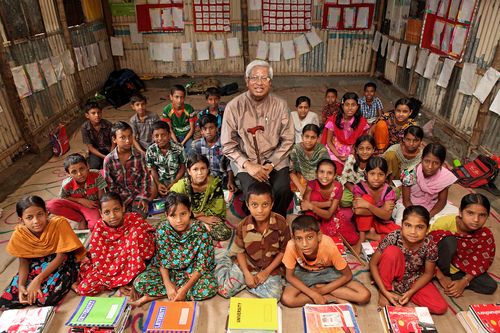
BRAC stands for an idea—an idea of a world where everyone has equal opportunity to realize their potential.”
Sir Fazle Hasan Abed (Abed bhai)
BRAC Founder
BRAC no longer stands for a set of words—it stands for a vision. Its vision is a world where poverty and inequality can be unmade, and where every person has the opportunity to realize their potential.
The organization has reached more than 145 million people across Asia and Africa through proven, community-led programs. It continues to lead with pragmatism and purpose, unlocking human potential at scale, with an audacious goal to reach 250 million people by 2030.
BRAC remains true to its founding belief: that poverty and inequality are human-made—and that together, we can unmake them.