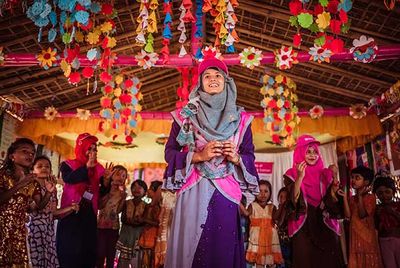
This garland of handmade paper flowers adorns the ceiling of a BRAC Play Lab, one of dozens strung in bright rows of red, yellow, pink and white above the children’s heads. Before a single lesson starts, a garland like this tells a child that this room was made for them, and by the people around them.
Play Leaders invite parents and community members to craft the decorations together from simple, low-cost materials, putting BRAC’s philosophy of frugal innovation into practice. The children gain a joyful place to learn, and the adults who helped build it become more invested in supporting their education.
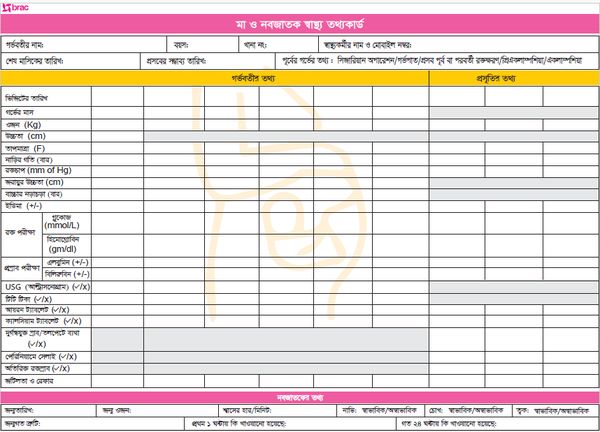
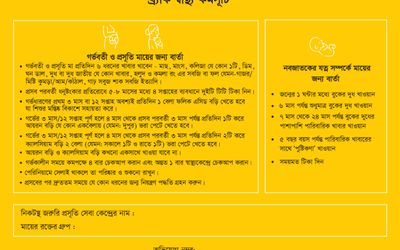
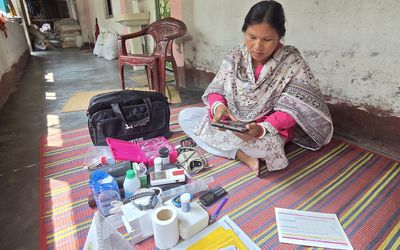
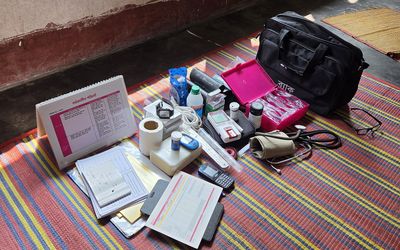
On the front and back of each card there is simple advice any mother can follow: eat six kinds of food every day, have at least four check-ups during pregnancy, breastfeed within an hour of birth, and give only breast milk for the first six months. The card also has space for the nearest emergency obstetric care center and the mother's blood type.
BRAC's health work began in 1972 with four clinics in Sulla, northeastern Bangladesh. When women avoided clinics staffed mostly by men, BRAC trained local women to go door to door instead.
Today, 100,000 community health workers and volunteers serve roughly 80 million people a year across 61 districts of Bangladesh.
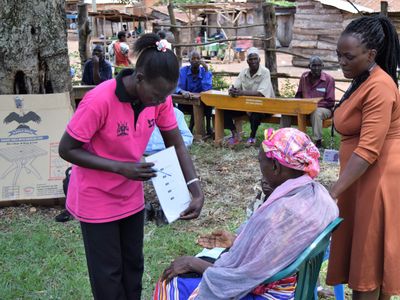
The same door-to-door model now reaches more than 259,000 people in Uganda, where BRAC has worked since 2006. Community health workers bring care to the last mile: eye care, treatment for common childhood illnesses, and early identification of pregnancy with referral to skilled care. (source)
Did you know?
Between 1980 and 1990, when diarrheal diseases were a leading cause of childhood death, BRAC health workers went door to door teaching mothers to make a rehydrating solution at home. The challenge was getting the mixture right. Too much salt could harm a child, and most homes had no measuring spoons or cups. So BRAC built the recipe around what every kitchen already had: a knuckle of salt, a fistful of molasses, and half a litre of water. This simple solution reached 12 million families and helped make Bangladesh a global success story. Diarrhea, once responsible for about 1 in 5 deaths of children under five, caused only around 2% of those deaths by 2011.