I wanted women to have somewhere safe to go.”
Faridah, Founder, INEAC Medical Clinic, Uganda.
Two roadside births, and a decision
I was a nursing student when I came across two separate roadside births. Both mothers were unable to make it to a hospital. There was none nearby. I ended up assisting one of the mothers to give birth, right there on the side of the road.
That was the height of COVID-19, and I was working on my dissertation on delivery outcomes among postnatal mothers. As part of my research, I traveled to Harugongo, where I witnessed the two women at one of their most crucial moments in their lives, with absolutely no support.
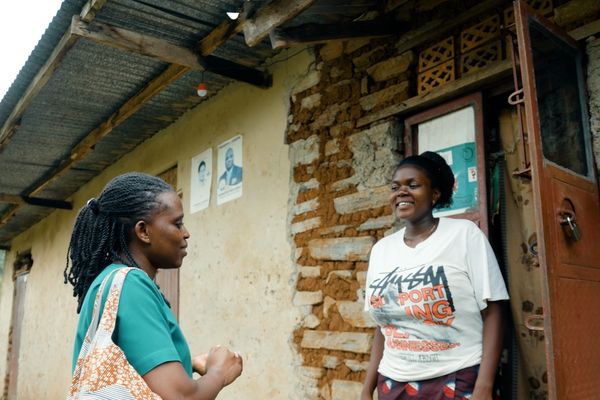
Today, the spot is marked by the signpost of INEAC Medical Clinic, the facility I decided to set up after what I saw that day.
I started the clinic with UGX 2 million (approx $550). It was all my savings from the upkeep allowance for my A-level. I was awarded the scholarship under the Mastercard Foundation Scholars Program, implemented by BRAC Uganda.
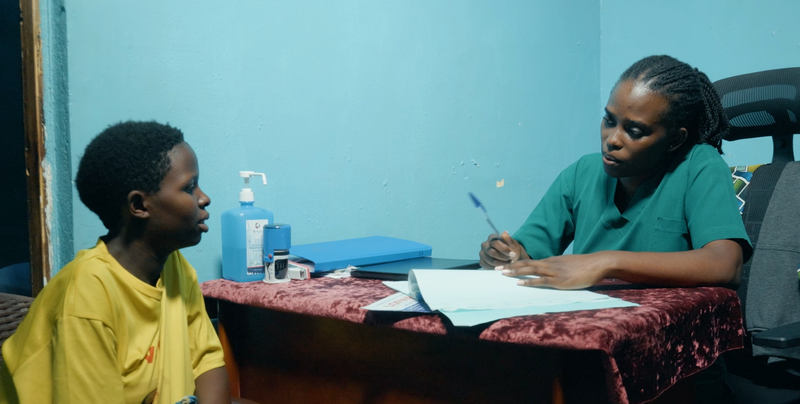
Photo: Uganda, 2026
I initially rented a single room and partitioned it with plywood to create a functioning clinic space back in 2021. I started with some basics – oxytocin, antibiotics, vitamins, gloves, a fetal scope, a handful of instruments, an examination bed, an emergency bed. Back then, the clinic brought a revenue of UGX 300,000 just enough to charge for drugs and keep going.
When it comes to the healthcare sector, I believe it is the skills. If you have the skills, it doesn't matter where you are working from. You can save a life.
Today my clinic offers 14 health services, generates a profit of roughly UGX 1.6 million, and employs three full-time staff members.
From a 9-mile walk to school to nursing school
I was raised in a family of 24 children, in Kyenjojo district. I grew up in a polygamous family but my mother did not live in the same house. I got close to her much later in life. It was a lonely childhood and staying in school was a constant struggle. Some of my siblings dropped out to work in the informal sector. Others married young.
Despite the disruptions, I kept finding my way back to school. I took on small jobs at a nearby clinic to support myself, while studying for my O-level at Kyebambe Girls Secondary School on a bursary. Every day I walked nearly 15 kilometres to and from school. I was determined to learn and do something meaningful for my community. My experiences at the clinic gave a glimpse of the difference I could make, and I found that I thoroughly enjoyed it.
When I was in Senior Four in 2015, my school passed around scholarship application forms from BRAC Uganda. I applied and was selected for the Mastercard Foundation Scholars Program, which took me through my A-level studies at Nabisunsa Girls School. I ended up saving a lot of my scholarship money, which is what I used to set up the clinic.
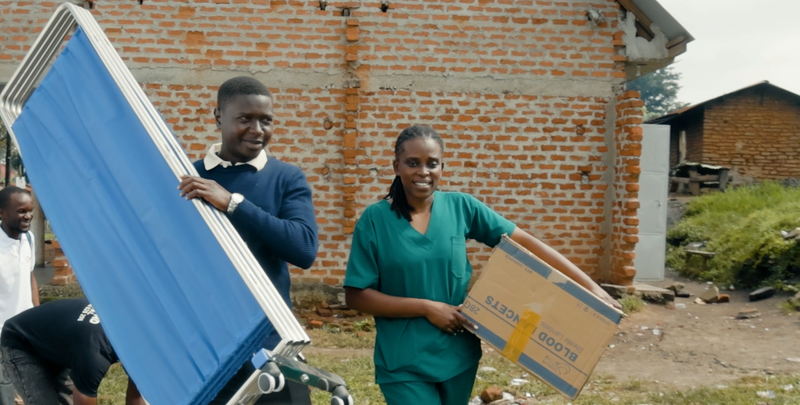
Photo: Uganda, 2026
After A-levels, I started my Bachelor's degree in nursing science at Mountains of the Moon University, followed by a postgraduate diploma in health service management. I am now pursuing a Master's degree in public health, specialising in maternal and child health, at the same university.
New equipment, fewer referrals: What the entrepreneurship fund changed
In 2024, I joined the Scholars' Transition Entrepreneurship Fund, which provided a total of UGX 7,254,960 (approx USD 2,000) in financial support across two tranches. The first tranche went into renovating the clinic and building up stock. I used the second to buy new equipment: an oxygen concentrator and a nebuliser, along with more drugs. I also had some remaining afterward which I put toward my savings.
The equipment changed what the clinic could safely handle. There have been minimal referrals since we are able to take on complex cases. Emergency case management has also improved. Alongside the new machines came a broader shift: renovated premises, a fuller stock of supplies, and steadily increasing patient turn-up.
I also started COSMOS Health Initiative, a nonprofit formally registered in 2024 that works at the intersection of health, environment and technology. We support mothers to start sustainable income through farming, providing seeds and the resources they need to get started.
Right now, I am excited to be collaborating with students of computer science to develop an automatic dustbin. Hopefully, this will be part of more local innovations, bringing tech in environmental and health spaces.
What's next: A hospital by 2030
Last year, I acquired a 100-by-100-foot plot of land, funded through the FAST project along with my own savings from the clinic and other ventures.
On this land, I plan to build a general hospital with five wards and a specialised maternal-child healthcare unit, to serve 100 admitted patients. Construction is set to begin soon with completion targeted for 2030.
In my lifetime, I want to see a day when no woman suffers simply because there is no hospital nearby. I will keep working towards that goal, until that day becomes a reality.
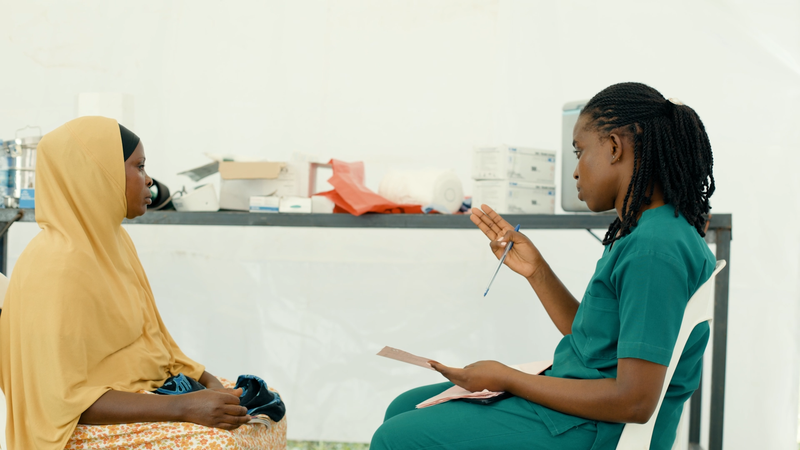
Photo: Uganda, 2026
About the Scholars’ Transition Entrepreneurship Fund
The Scholars' Transition Entrepreneurship Fund is a targeted initiative under the Mastercard Foundation Scholars Program. It helps scholars and alumni turn social innovation and business ideas into reality through hands-on training, expert mentorship, and seed investment. BRAC is implementing the project in Uganda to improve economic independence and development for 200 alumni by nurturing their entrepreneurial spirit, upskilling as well as enhancing the ecosystem for innovative start-ups and growth of the existing businesses.
About the Mastercard Foundation Scholars Program
The Mastercard Foundation Scholars Program is a global initiative that develops the next generation of transformative leaders by enabling talented, service-oriented young people to pursue higher education and grow their leadership potential. Launched in 2012, the program is implemented in Uganda by BRAC.
Written by: Barbra Ampaire, Communications & Public Relations Manager, BRAC Uganda
Learn more about BRAC's work with young people.