For families living on the edge of survival, one fire can undo years of effort. In a single evening, it can take away a home, a job, and a child’s safe place to grow. This is what happened to Lufta, a childcare provider trained by BRAC.
The fire struck Korail, one of Dhaka’s largest informal communities, at 5:20pm on November 25, just after parents had collected their children for the day. Amid the smoke and neighbors’ screams, Lutfa rushed to safety—grateful she wasn’t also ushering the 14 children in her day care to safety.
Korail is home to low-income workers, including climate migrants. They work as domestic helpers, rickshaw pullers, garment workers, and small vendors. When fire strikes here, it not only burns houses. It breaks fragile livelihoods.
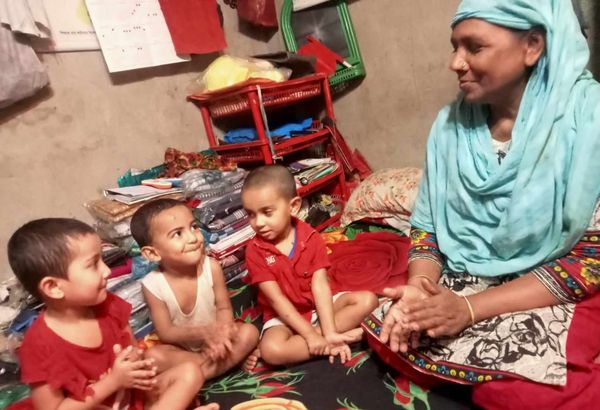
Among the ashes were three home-based daycare centers run by local women like Lutfa. These were safe, familiar places for up to 14 children aged three to eight years. They played, learned, and stayed protected while their mothers worked.

The centers provided steady income for the teachers. After receiving childcare training from BRAC, and a stipend of about $500 for books, toys, and other essentials for a childcare center, she opened her business. However, each caregiver brings their own items to a home daycare, too. This includes a bed for naptime, fans to keep their homes cool, and water filtration systems to provide safe drinking water.
“It was more than livelihood,” Lutfa says. “This allowed me to help other mothers grow financially. It gave me a good feeling when I saw the other women happy and earning. And my own family and neighbours support me. They understood the importance of my work.”
The three caregivers lost their homes and their income—about $50 each month per woman. And 42 mothers report that they’ve given up their work and wages to stay home with their children.
Lutfa moved to a different section of Korail, but needed to earn money quickly. She is now working for four local families as a helping hand. Once she has reset her home to be ready to host children again, she plans to put her BRAC training, which includes two refresher courses each year, to use once again.
“Of course, spending time with children gives me peace, too,” she says.
The flames consumed 2,772 homes like hers, made of tin and wood, within minutes. Firefighters worked through the night, and while no lives were lost, 7,000 people were without shelter.
Emergency relief has helped families survive the first shock. Food, basic items, and temporary support reached Korail. But rebuilding lives takes longer.
“The caregivers are a critical piece of the puzzle as families rebuild,” says Rezvina Parvin, Manager of BRAC’s Urban Development Programme. “If we can restore their homes and services first, it frees up parents to begin earning regular income once again. Mothers need safe places where they can leave their children and return to work with peace of mind. Without this, families remain trapped in loss.”
Rebuilding in Korail will take more than replacing structures. It will depend on restoring the services that enable families to earn, care for their children, and regain hope and stability. For caregivers like Lutfa, that means rebuilding home-based childcare, so mothers can return to work, children can find safety and routine again, and communities can begin to recover with dignity.