This story is part of our Where No Road Goes series. Join us on a journey to some of the most remote places BRAC works, and see how your gift reaches farther than you might think.
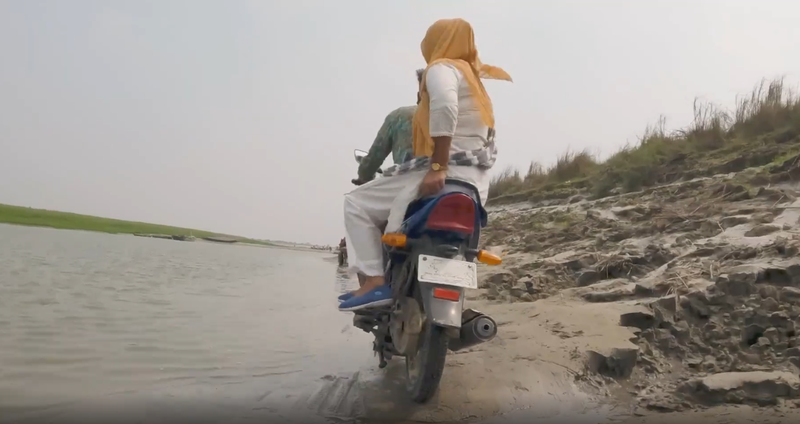
Imagine: You’re in labor. Your baby is coming, but you’re hours from the nearest hospital or clinic. To get there, you have to ride in a horse cart or on the back of a motorcycle on muddy roads. Then, you have to wade through murky, snake-infested water, climb into a boat, and cross a river. From there, you might continue walking for miles.
This is the reality for the women of Bangladesh's char communities, a chain of remote islands in the middle of the Jamuna River. It's a place most Americans have never heard of. Here, the journey into motherhood can be uncertain before it even begins. Too many mothers and babies don’t survive it.
Keep reading to learn how BRAC brought maternal health care to a place where no road goes, and how you can help more mothers birth their babies safely.
Before BRAC: Giving birth when the nearest doctor or midwife is hours away
More than 500,000 people live in the rural chars of Sonatani and Ghorjan, Bangladesh. There were no government hospitals or health centers nearby. The roads are sandy, and they often flood. Only horse carts, motorcycles, and boats can navigate the rugged terrain.
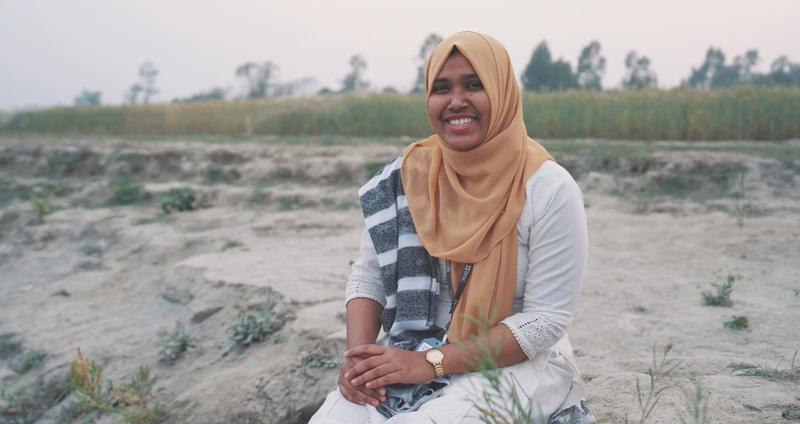
“For a pregnant woman, already in pain, this kind of travel is extremely painful,” said Tahrima Khatun, a BRAC midwife. For many, the journey was too long, too dangerous, or simply not possible.
For those reasons, most women in this area gave birth at home. They only rushed to seek medical care if and when complications turned life-threatening. “At home deliveries, we have seen both mothers and babies die,” said Tahrima in an interview with the Daily Star.
When a woman in labor needed medical help, it became a race against time. She had to switch between motorcycle, horse cart, and boat to reach a doctor or midwife. Some women gave birth on boats or by the side of the road. A few years ago, one woman went into labor before she even reached the river. She had her baby in the bushes.
Murshida Akter, a 20-year-old who shared her story with the Dhaka Tribune, knows this journey well. When she was pregnant with her first child, every checkup—and her birth—meant a strenuous trip to the mainland. “It was extremely difficult,” she shared.
For many families, the journey ended in loss. “Many women died while trying to cross these remote routes or during childbirth,” said Murshida's grandmother.
As Mohammad Jobbar Ali, a community leader in his 60s, put it: “It feels like neither the government nor anyone else even knows that so many people [half a million] live here. Nobody thinks about us.”
Rasel Rana, a local resident, shared his community’s goal simply: “What we want is safe, normal deliveries, so both mother and baby stay healthy.” On Ghorjan char, this is becoming the new reality.
Closing the distance between expectant mothers and care
BRAC goes where no other organization goes: places deemed “too remote,” “too complex,” or “too risky.” These are always places that are up against extreme poverty. That’s why BRAC saw an opportunity to provide maternal health care closer to home in the char communities.
In November 2025, BRAC opened two health centers in Ghorjan through the Char Health and Resilience for Mothers and Society (CHARMs) project. The centers are open 24 hours a day, staffed by midwives, medical assistants, and health workers. They offer essential care for about 30,000 women in the area.
A doctor visits every week, and telemedicine connects patients with doctors in Dhaka the rest of the time. Expectant mothers can get checkups, ultrasounds, diagnostic tests, and vaccines. Most importantly, they can access safe delivery services.
If a birth has complications or a C-section is needed, staff send the mother to a larger hospital, and BRAC gives her family a stipend to help cover costs.
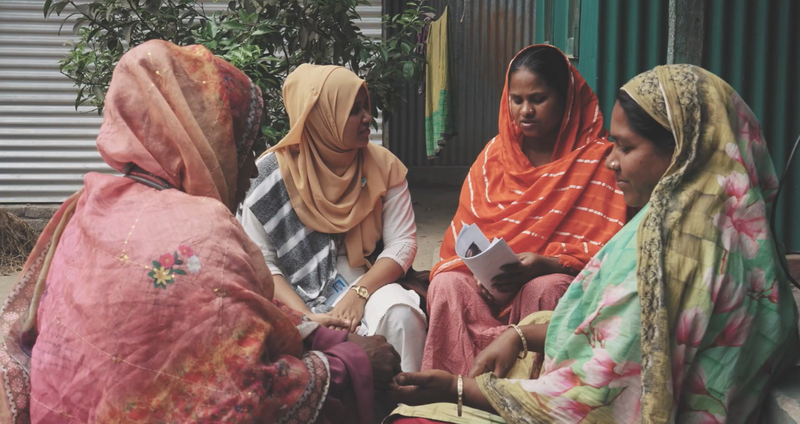
Building trust with the community took time. “Our field workers visit homes regularly to encourage women to seek care,” said midwife Tahrima. She also shared that the local maternal death rate has dropped significantly since the centers opened.
“Previously, many women did not even know the position of the baby or the expected delivery date,” said Dr. Jannatul Piya, a BRAC doctor. “Now, with ultrasonography and regular checkups, both mothers and babies are healthier.”
“We believed it would change our lives, and it has.”
When Murshida became pregnant with her second child, this time was different. BRAC health workers from the center visited her home regularly throughout her pregnancy, educating her on topics like prenatal nutrition and the importance of folic acid.
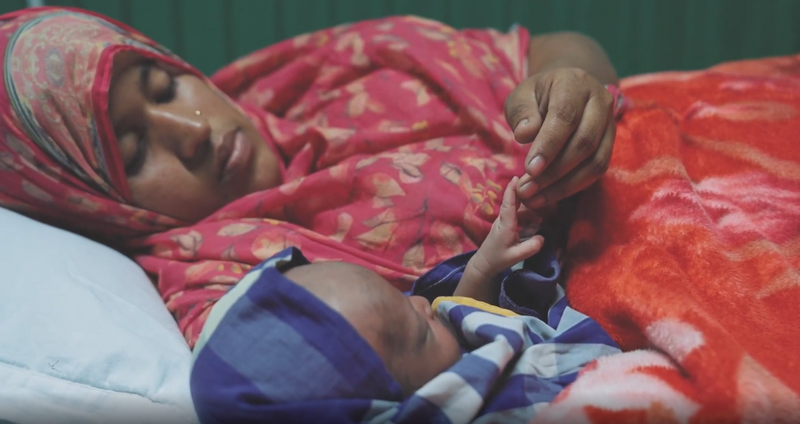
She went into labor this past May, and she didn't have to leave her island. She just went to the nearby BRAC health center. There, Murshida gave birth to a healthy baby boy. Her delivery cost her 400 taka, or about $3.25.
Murshida’s baby boy is one of more than 160 babies who have been delivered safely at the two BRAC Char Health Centers. Today, 360 pregnant women get regular care.
“The BRAC health center has become a symbol of hope for safe motherhood,” said reporter Salma Akter Sharmin. Mohammad Jobbar Ali, the community leader who once felt forgotten, said: “When this center was first proposed, we believed it would change our lives, and it has.”
Where no road goes, you can pave the way
Most international development organizations stop at the end of the road, but that’s where BRAC’s best work begins. As one of Bangladesh’s leading providers of maternal and newborn health care, BRAC paved the way for care on these river islands. Now, mothers and babies no longer have to risk everything to meet each other.
But the work isn’t done. Beyond Ghorjan, many mothers in Bangladesh’s hardest-to-reach places still make treacherous journeys to give birth. No mother should have to risk her life, or her baby’s, just to get care.
You can help change that. Make a gift to BRAC today to bring maternal health care to to remote communities. Your gift of any amount will help more mothers and babies access life-saving care.