This time last year, the international development community was grappling with the destabilizing impacts of major aid cuts. The cuts were destructive and, in many cases, deadly. And yet, progress continued.
Eighteen months later, we find ourselves in a newer, different space. We are not frozen. Innovation, impact, and opportunity are not frozen. But the question this moment is pressing us to answer is: Are we willing to do development differently? That is the question BRAC is bringing to UN Week 2026.
Throughout more than 50 years of working alongside communities, BRAC has learned a difficult truth. The biggest barrier to solving complex challenges like extreme poverty and climate change is not a lack of good ideas. It’s how we fund and scale the solutions that already work.
Currently, a small group of major bilateral and private funders, largely based in the Global North, control most of the resources for global development. They determine how the money gets raised and where it goes. They decide the pace of change, the size of the ambition, and even how success is defined.
Too often, that turns aid into something that controls how people, communities, and countries direct programming instead of freeing them to find their own pathway out of poverty.
Paying for a solution is not the same thing as being an expert in it. The people who live closest to the problem are the ones who understand it best.
What we’re asking for is a genuine shift in trust: to put less emphasis on top-down ideology and more confidence in the people and organizations who know what works in their own communities.
That is the message BRAC is bringing to the United Nations General Assembly (UNGA) this year.
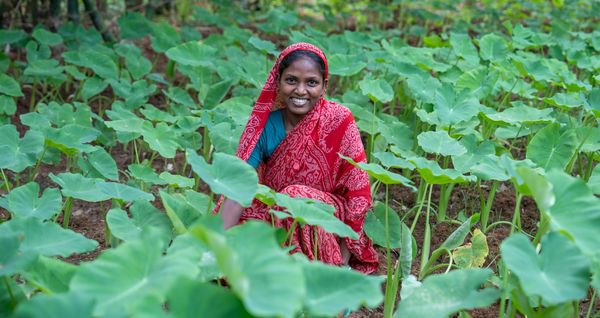
Trusting the people closest to the problem
Today, a lot of development funding flows through a narrow, highly controlled pipeline. Short-term grants push everyone toward quick fixes instead of lasting change. The result is a system that limits what’s possible, even when proven solutions already exist.
At BRAC, we know there’s a better way. It starts with real partnership from the ground up. It’s built on collective, accountable investments where donors and communities share risk.
It means identifying and working with different sources of funding while asking legacy donors who control the majority of development resources to evolve their investment strategies. It means listening to what’s actually working and supporting those solutions. It also means funding for the long haul, because long-term results take years, not one grant cycle.
The evidence is there. Over the past five decades, BRAC has worked with more than 145 million people across more than a dozen countries. Programs began in post-war Bangladesh, then one of the poorest countries in the world. They grew because they worked.
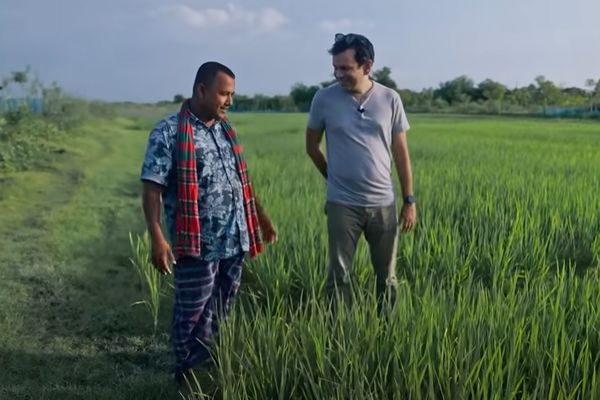
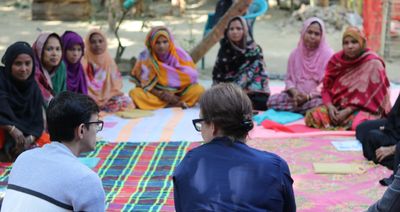
BRAC didn’t arrive with the answers. We searched for and built them alongside the community, out of necessity and solidarity, had successes, and learned from failures. Solutions were built with the people who needed them, not for them.
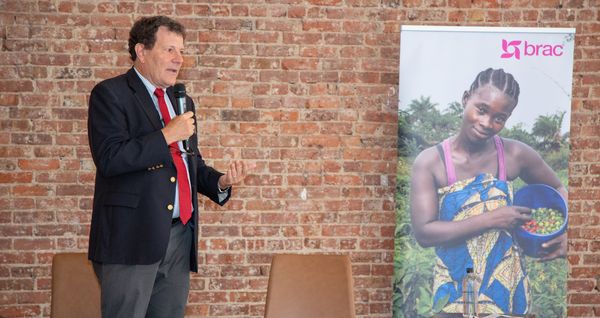
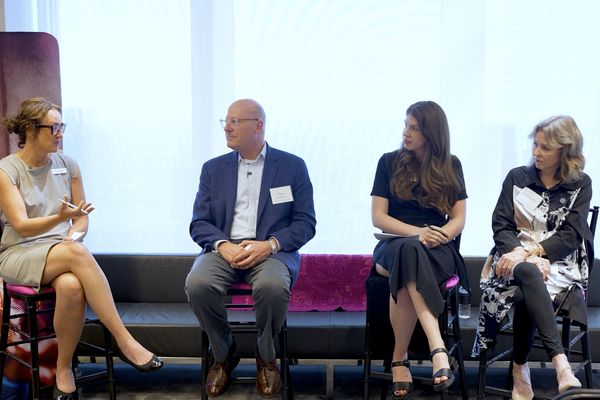
Nicholas Kristof, New York Times columnist, speaks at a BRAC event alongside UN Week 2025.
Scaling the solutions already proven to work
BRAC is hosting an anchor event during UN Week. “Collaborative Action: Scaling Proven Development Solutions” will take place on Thursday, Sept. 24.
The event will explore the barrier holding the development sector back: the fact that proven solutions exist, but funding models haven’t caught up to scale them to match the opportunity. It will bring together funders, researchers, and implementers working to close this gap. Together, we’ll challenge the status quo, ask the hard questions, and explore what it actually takes to do development differently.
No one partner can meet this moment alone. One model that I believe is part of the answer is collaborative funds. Funding collaboratives have been brilliant at bringing resources together and directing them toward transformational impact. BRAC is now convening and stewarding collaborative funds around some of our most tried-and-true, proven models.
Collaborative funds like these are critical for the sector to move away from projectized support spread thinly across many disparate partners. Funding scale has historically been the role of development assistance, but now we need a new way forward. By bringing like-minded philanthropy together around an evidence-based, proven, and shared strategy, we can truly unlock the level of funding needed to scale.
That’s why the conversation this week is designed not just to exchange ideas, but to move toward something more: the kind of bold, durable partnerships that can actually match the scale of the opportunity to achieve lasting change.
The afternoon will open with a fireside chat that I’ll moderate, featuring Shameran Abed, Executive Director of BRAC International, who has spent nearly two decades scaling BRAC’s programs.
From there, we’ll move into a discussion with:
- Shameran Abed, Executive Director, BRAC International
- Anne Mutta, Regional Director for Africa, BRAC International
- Rachel Glennerster, President, Center for Global Development
- Abe Grindle, Director of Programs, Co-Impact
- Dean Karlan, Founder, Innovations for Poverty Action; Professor of Economics and Finance, Northwestern University
- Rosemary Nduhiu, Executive Director of Country Programs, Mastercard Foundation
This event will be an engaging conversation among people who care about getting this right. I look forward to sharing reflections on the conversation following the event.
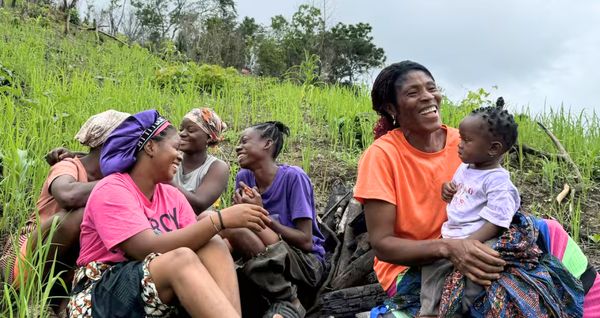
Doing development differently
The development sector is under immense pressure right now. Government funding for foreign aid has been slashed over the past few years. Budgets are tighter than ever. Trust between funders and communities can be hard to build.
But the answer isn’t to freeze. The answer is to do development differently.
By investing in the power of the people closest to deep-rooted challenges, we can end extreme poverty at scale.
This is the spirit BRAC is bringing to UN Week this year: the conviction that proven solutions exist, that the people closest to deep-rooted challenges are best positioned to lead, and that progress—real, lasting progress—is still possible.
We will be sharing reflections and a full recording after our Collaborative Action event for everyone who wants to be part of this conversation. You can sign up here to receive it in your inbox.
However you engage with UN Week this year, we hope you'll carry this question with you: What would it look like to do development differently? We think the answer starts with trusting the people closest to the work. And we're committed to making that case and leading by example for as long as it takes.
Julia Roberts is President and CEO of BRAC USA. Follow along with Julia on LinkedIn for more updates during UN Week and beyond.