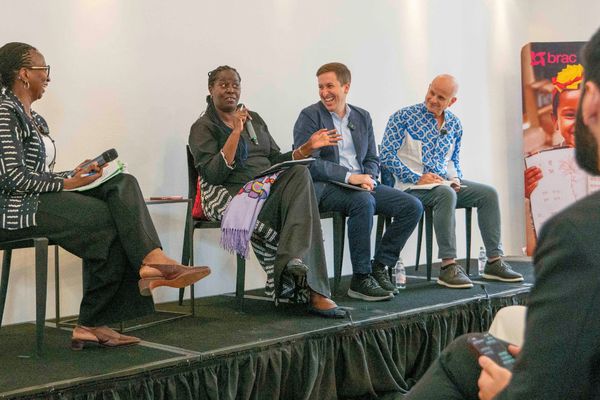
This reflection was written by Emily Gilels, a BRAC USA Board Director, following her first field visit to Bangladesh in 2025. Emily visited BRAC’s Ultra-Poor Graduation program, Rohingya refugee response in Cox’s Bazar, and women-led social enterprises including Aarong. Her perspective highlights BRAC’s holistic approach to empowering communities and advancing women’s lives across multiple sectors.
I joined BRAC in 2025. As a newly appointed Director for BRAC USA, I was filled with long-standing and deep admiration for the organization. For more than 20 years, I’ve been an American entrepreneur, building a national food business inspired by South Asian cuisine—starting with restaurants and then, during the COVID-19 pandemic, transitioning to consumer packaged goods.
My dream has always had two tracks running side by side: to grow a successful business, and to have a meaningful impact in support of NGOs like BRAC in the fight to alleviate poverty and bring women up in the world.
Like most donors, I had never actually seen, in person, the programs I’d supported. I had never stood with the people whose lives were being changed. I could not wait to land in Bangladesh and go on field visits with BRAC.
What I found was not “aid” in the narrow sense. It was BRAC as an ecosystem: economic and social programs woven together in a way that starts with human dignity and ends with self-reliance. It is hard to put into words.
Words fall short. But this is my attempt.
What I found was not 'aid' in the narrow sense. It was BRAC as an ecosystem: economic and social programs woven together in a way that starts with human dignity and ends with self-reliance.”
Emily Gilels
BRAC USA Board Director
Ultra-Poor Graduation: from despair to self-reliance
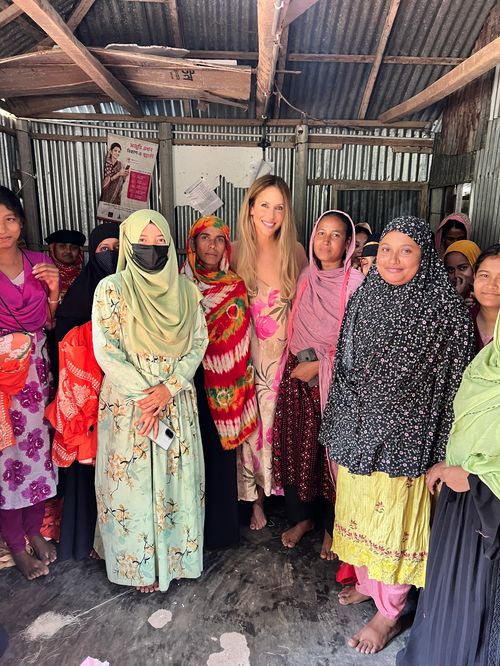
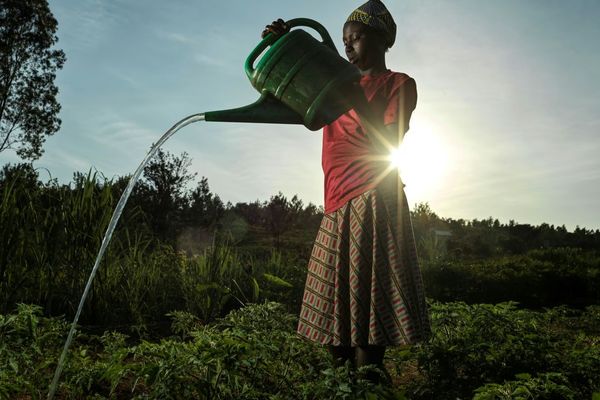
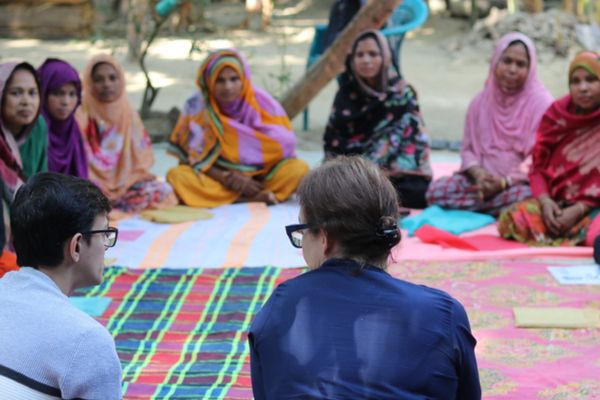
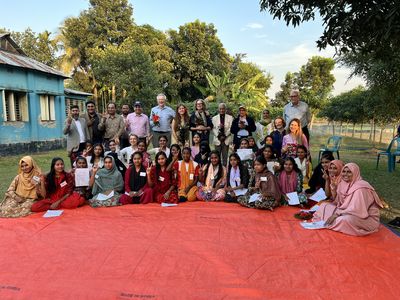
In villages outside Kishoreganj, I met women in various stages of BRAC’s Ultra Poor Graduation (UPG) program—new entrants, women mid-way through, and proud graduates now thriving as microfinance clients with successful enterprises.
For those unfamiliar, UPG is a holistic, time-bound, and context-specific set of interventions over 12+ months that strengthens agency, restores dignity, and puts people on a pathway to self-reliance. It combines what people experiencing extreme poverty need most: a safe home, food security, productive assets (like livestock), skills training, savings and credit, and—crucially—regular coaching and emotional support from local female staff. One hundred percent of the participants in Graduation cohorts are women.
Every woman I met had children. Every woman had a story of lost hope until BRAC found her—literally found her—through assessments in or near her village. Many were widowed, living with disabilities, or facing health issues that had pushed them to the absolute margins. Some were skeptical at first. They weren’t sure if they could trust that anyone would really show up for them. But they were living without shelter, food, or healthcare. Several told us that they saw no way forward and, at times, wanted to die from despair.
I met a woman named Parashmoni. She married late at 28, because of a physical disability in her legs that she said left her unwanted by the men in her community. She was widowed just five years later and left with nothing—no education, no assets, no place in her community, no way to contribute financially to her family. She was living invisibly on the fringe of society.
When BRAC reached her and enrolled her in UPG in 2025, everything began to change. Within a few months, BRAC helped her build a tin-sided home; they designed gardens that could withstand weather shocks and supported a rice paddy that now feeds her family. With just $50 and steady coaching from a local female BRAC staff member, she purchased her first cow, a bull, and learned how to raise that asset and sell it at market. Today, she lives independently as the head of her household, caring for her children and making decisions about their future.
Another woman I met, Asia, has been with BRAC for over 20 years. She graduated from UPG in 2013, and moved on to BRAC microfinance and BRAC Bank. She now raises hundreds of chickens, owns rickshaws, runs a fishery, and raises cattle for sale. She is a true entrepreneur and a pillar in her community—someone others look to for employment, advice, and example.
The breadth of support is remarkable. I learned, for instance, that BRAC offers insurance services for cattle so that when a woman invests her hard-earned resources into an asset, she is not left exposed to a single shock.
One detail that deeply moved me: BRAC requires that a teen daughter not be sold into marriage if her mother wants to stay in the UPG program. That single condition can save a girl’s life and change the trajectory of the next generation.
I kept thinking: if you are living in extreme poverty, and even one person shows up reliably each week to check on you, to bring you what you asked for, to remind you that you are seen at this critical juncture between hope and despair, life and death, that person might just save your life.”
Emily Gilels
BRAC USA Board Director
Beneath all this is what I think is one of BRAC’s greatest strengths: the human element. The weekly visits from BRAC’s community workers—showing up, listening, educating, supporting, following through—create trust. I kept thinking: if you are living in extreme poverty, and even one person shows up reliably each week to check on you, to bring you what you asked for, to remind you that you are seen at this critical juncture between hope and despair, life and death, that person might just save your life.
Each year, BRAC welcomes about 70,000 women to the program, and 95% graduate from extreme poverty.
Cox’s Bazar: holistic support in the world’s largest refugee camp
From rural villages, we traveled to Cox’s Bazar, where nearly a million displaced Rohingyas from Myanmar now live in 33 camps (there is an additional camp in Bhasan Char). The displaced population outnumbers the local population three times over. More than half are children. Many were born inside the camp and have never experienced life outside its gates. They are living without official refugee status and without a clear path forward.
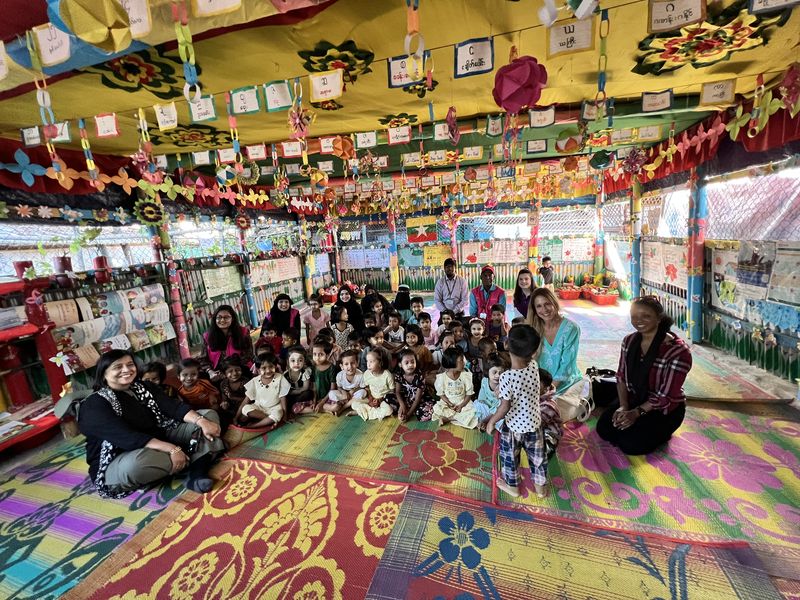
Inside the camp, we visited the Humanitarian Play Lab, an oasis co-created by BRAC and the LEGO Foundation. Stepping into the colorful classroom felt like entering a different world. The children, all under five, were engaged in songs, stories, and play-based learning with a BRAC staff member and a local Rohingya woman leading the session.
In that cheerful room—clean mats, bright colors, gentle structure—the words that came to me were “life changing.” For a child born into a camp with limited rights and an uncertain future, a few hours a day in a place where they can learn, play, and simply be children is not a small thing. It is foundational. These formative years are mission-critical in a child’s social and emotional development. The return on investment across more than 250 (and growing) Humanitarian Play Labs is obvious when you sit on the floor and look into these children’s eyes.
In that cheerful room—clean mats, bright colors, gentle structure—the words that came to me were 'life changing.' For a child born into a camp with limited rights and an uncertain future, a few hours a day in a place where they can learn, play, and simply be children is not a small thing. It is foundational.”
Emily Gilels
BRAC USA Board Director
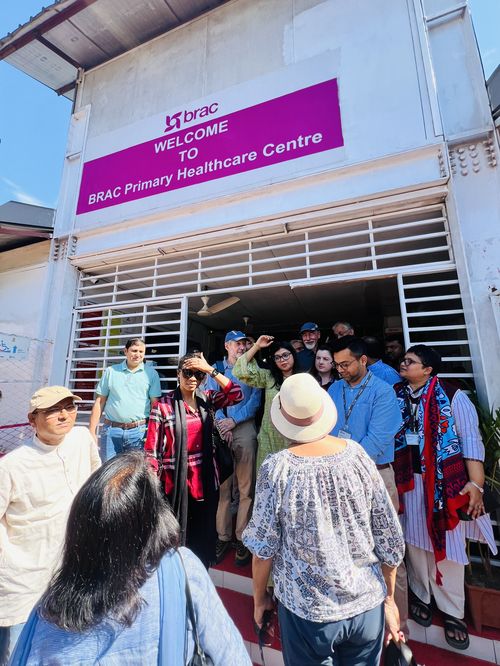
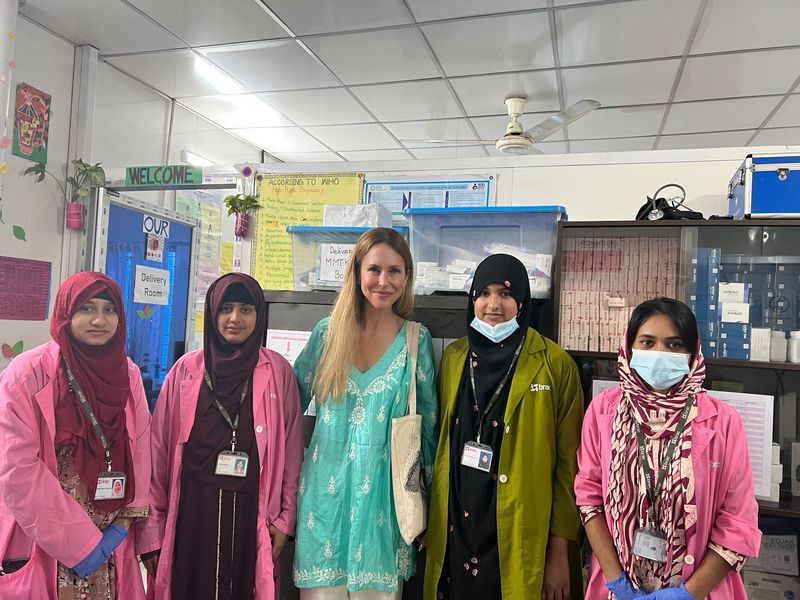
If those same children or their mothers fall sick or need support, they go to BRAC’s Primary Health Care Centers like the one we visited in Camp 1 East. These aren’t bare-bones clinics. They provide exams, basic health care, vaccines, prescription medicine, and emergency response. They also address mental health, including depression and suicidality, and respond to gender-based violence cases—offering safe referral, legal support, and protection when needed.
The BRAC healthcare team we met was warm, gracious, and deeply compassionate. They treated every person who walked through the door with respect, no matter how crowded or chaotic the day. Standing there, we felt humbled in their presence because of the work they do and the way they do it—with integrity, inclusivity, and an extraordinary depth of humility.
We also visited the English Language and Digital Literacy Training Centre. In a clean, brightly lit room, young Rohingya men sat at computers practicing Microsoft Office and building their resumes. Their instructor was a BRAC staff member called Orkeya Adhicari. She moved through the room in her bright pink sari with a huge smile, answering questions and encouraging them.
When we spoke with the trainees, most said they wanted to become a voice for the Rohingya—to be leaders in their community and to speak to the international community about justice and rights. They were full of hope. They told us that learning English and digital skills would allow them to communicate their story beyond the camp’s borders.
Sitting with them, it struck me again: Wherever BRAC was in this camp, there was light in the darkness. The Play Labs, the health centers, the training centres—all of them are about far more than emergency aid. They are about giving people the tools, confidence, and recognition they need to shape their own futures, even in the most constrained circumstances.
Ayesha Abed Foundation and Aarong: enterprise with heart
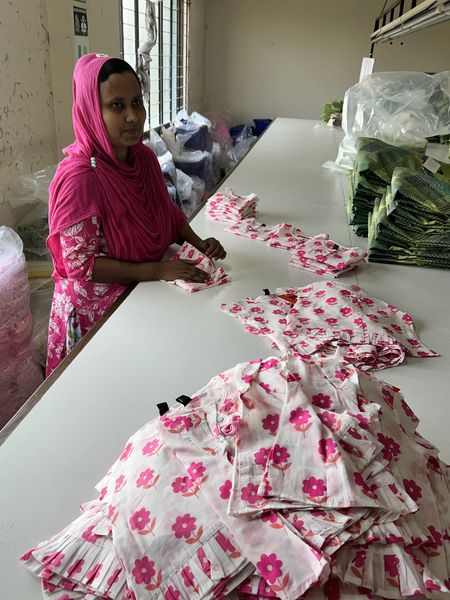
One unforgettable day for me in Bangladesh was visiting the Ayesha Abed Foundation (AAF) in Trishal, the backbone of Aarong—BRAC’s flagship social enterprise and one of the most beloved retail brands in Bangladesh. Aarong’s 31 stores connect artisans in rural areas to consumers in urban centers. Over 30,000 artisans—97% women—are engaged through AAF.
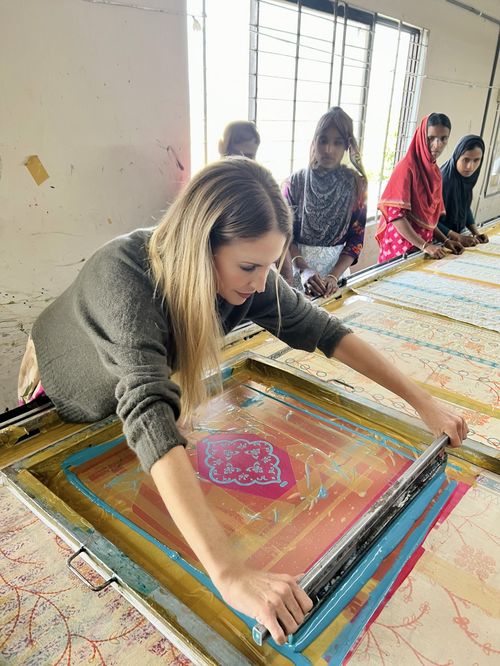
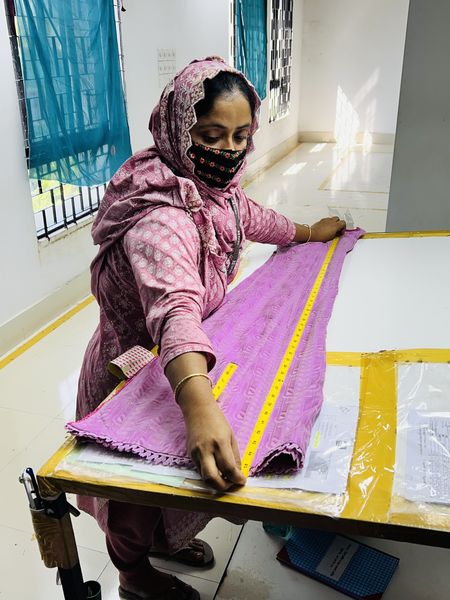
As a woman entrepreneur who loves arts and fashion, seeing the women behind Aarong was incredibly inspiring. We toured the Foundation in Trishal and then a specialized rural wing where young women were hand-sewing garments destined for Aarong’s racks. I offered to do a Q&A as an American woman, and we talked while they worked—about their lives, their dreams, and their questions about the wider world. Afterward came an endless, joyful stream of selfies.
What struck me was not just their craftsmanship, but the way AAF is integrated into BRAC’s wider social development programs. These artisans don’t just receive a wage; they gain access to healthcare, childcare, legal awareness and support, retirement benefits, and other essential services. It’s a holistic approach that ensures women are not only earning but also building resilience and dignity in their communities.
Rehena Akhter shared that her first job was with AAF in Trishal. Widowed young and raising her daughter alone, she faced an attempt by her late husband’s family to take her home and assets. Because she worked for BRAC, she had access to legal services and support. She fought, and she won. She brought her daughter to work using AAF’s childcare when there was no family support. She accessed healthcare through the program for a minimal contribution from her paycheck. With the support of a manager who cared about her as a whole person, she was able to move up to become a QA Lead, hand-checking all incoming silks and fine materials before they went into production. She spoke about her work with enormous pride.
Unlike the tainted reputation of much of fast fashion, Aarong and AAF genuinely care for their artisans as family. Safety and fair treatment are non-negotiable. Overtime, when needed, is closely regulated and paid appropriately. In a modest office in Trishal, snacking on crab apples with us, the manager Ruhul Amin said he could have stayed in the corporate fashion world where he started. He was hesitant at first to join a social enterprise few people had heard of. But, he said, working for AAF has made him a better person. It has taught him to care for his people and to “always do the right thing as a human being, first.”
My trip ended with visits to two Aarong stores in Dhaka. They were buzzing with shoppers preparing for the holidays, including me—I have two daughters to shop for! Standing there as both a donor and a BRAC USA Director, watching customers eagerly buy clothing and accessories crafted by women whose stories I now knew personally, filled me with pride and renewed purpose.
Why BRAC’s holistic approach matters—and what you can do
When people ask what BRAC stands for (originally Bangladesh Rural Advancement Committee, but now, just "BRAC"), its Founder, Sir Fazle Hasan Abed, answered with a belief: that everyone has equal opportunity to realize their potential. That conviction is not a slogan. It permeates the entire organization—cohesively, genuinely, and earnestly, at every level.
From UPG to the Rohingya response, from healthcare to human rights, from artisan livelihoods to legal support, BRAC’s approach is holistic. It recognizes that poverty is not just about income; it’s about exclusion, vulnerability, and lost chances across a person’s entire life. And it responds with equal depth—economic programs, social services, protection, education, and, above all, a strong and compelling human connection.
As a new BRAC USA Director, standing where BRAC stands has changed me. It has clarified, more than ever, why this type of work deserves our support—not only as donors, but as partners, advocates, and storytellers.
If you are reading this as a humanitarian, a philanthropist, an entrepreneur, or simply someone who believes in justice for women and people living in poverty, I invite you to:
- Learn more about BRAC’s holistic model and its work across 14 countries.
- Partner with BRAC if you are in a position to bring resources, ideas, or platforms.
- Support BRAC financially so more women can graduate from ultra-poverty, more children can learn and heal, and more artisans can work with dignity.
- Share these stories so that the women and communities I met are not invisible.
Wherever BRAC shows up, there is light. My hope is that more of us choose to stand in that light and help it shine even further.