This is article originally appeared on World Bank Group blog. Read the article here.
This article is part of a series that showcases how our partners are advancing shared priorities by contributing to global knowledge, generating jobs, empowering communities, and driving development forward where it matters most.
We’ve spent years talking about what works in development. Over the last few decades, we’ve seen governments from low- and middle-income countries make significant investments and strides in economic growth and poverty reduction through large scale programs. We’ve also accumulated extensive evidence on how to achieve broad and lasting impact for people in extreme poverty: a sequenced, adaptive package of interventions that tackle the multiple constraints keeping them trapped (otherwise known as the Graduation approach).
Yet 1 in 10 people live in extreme poverty, and the gap between what is funded and what works remains vast.
At BRAC, we are working to close that gap to enable millions more people to build pathways out of extreme poverty. We are partnering with philanthropists to strengthen government poverty reduction systems across Africa and Asia and achieve greater, more lasting impact. Many of the government programs we support—currently in five countries—have existing resources, infrastructure, and capacity to leverage.
With philanthropic funds, we are able to provide government partners technical assistance and implementation support to augment what governments have in place, integrating what evidence shows is essential for transforming the lives of people in extreme poverty. The private capital we receive to support this work has been catalytic, enabling us to mobilize much larger public investment.
When we can prove to our government partners how adjustments to existing programs, such as adding intensive, ongoing coaching to their existing livelihood or social protection programs, we unlock much greater returns.
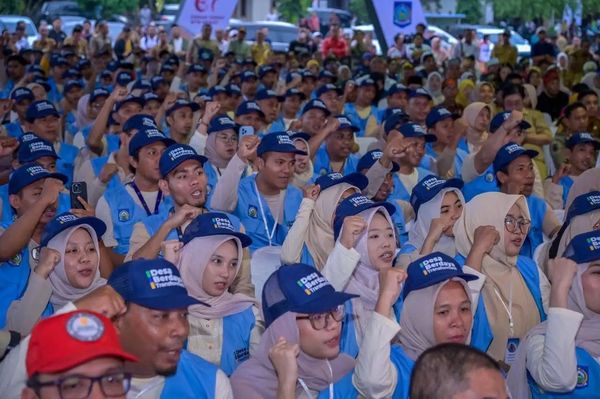
In just the past 12 months, we saw Rwanda’s district Government of Nyamagabe invest $4 million USD in the first year of a new Graduation program, Gira Wigire, in its leading demonstration district of Nyamagabe. More recently, the Government of Indonesia committed $50–55 million USD to support 165,000 households through its national Socio-Economic Empowerment Program (PPSE) in 2026, which will integrate the Graduation approach to achieve greater impact.
The significant reshaping of public funds is just the beginning, and provides confidence that these examples will grow well beyond these initial commitments.
Through deepened relationships with governments we anticipate that for every $1 USD of private philanthropy we leverage to provide support invested, we will complement at least another $10 USD—perhaps as much as another $50 USD—in government investments.
For example, in Indonesia we estimate another $4-5 million USD in private capital will enable us to help the Ministry of Social Affairs strengthen PPSE by integrating the Graduation approach and improving program targeting, household training, and coaching in 2027. It would also enable us to support the expanded implementation of local government-led Graduation programs, such as the program being implemented by the West Nusa Tenggara provincial government.
In Rwanda, $500,000 USD in private philanthropic support for the design and delivery of a district initiative was committed alongside $4 million USD from the Government of Nyamagabe for its first district level prototype. We anticipate that the initial effort in this first district will be replicated in a large share of the remaining 29 districts of Rwanda in the next seven years.
But it’s in the households where results really take off. When philanthropic capital is committed to strengthening government programs, we see $65 USD to $200 USD in long-term household consumption gains. Supporting governments to deliver programs modeled after what’s proven to achieve lasting impact, such as the widely-researched Graduation approach, private funding can help transform the lives of millions of people.
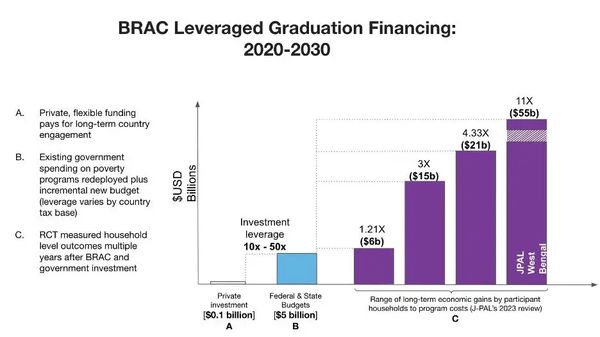
The long-run benefits of Graduation programs greatly outweigh the up-front costs. Research analysis by the Abdul Latif Jameel Poverty Action Lab found a benefit-cost ratio (ratio of program costs to household consumption gains) of between 121 to 379 percent across six rigorous trials.
Realizing that leverage means working in a manner that promotes government ownership to achieve scale that lasts. Improving government systems cannot be accomplished in short-term grants of one to three years. It calls for patient, often collaborative capital sustained for at least five and often needing ten years, directed toward government systems level change.
This kind of philanthropic funding is still relatively rare—though is gaining much more attention as the globe undergoes a major systemic shift in Overseas Development Assistance. Where bilateral funders may have helped augment government budgets in the prior era, such funding is scant in today’s world. Philanthropists can thoughtfully figure out a new funding model.
We are at a critical juncture in development. Bilateral aid has all but disappeared and at the same time we know much more about what works. Taking proven solutions to scale through thoughtful, philanthropic investments that complement and accelerate precious public investment must be one of the new approaches embraced in this new era.
Progress happens when diverse voices—from civil society, academia, think tanks, and beyond—come together with purpose to unlock lasting solutions.
Courtney Calardo is Head of Communications and Partnerships at BRAC Ultra-Poor Graduation Initiative.
Read the full article on the World Bank Group blog.
Featured
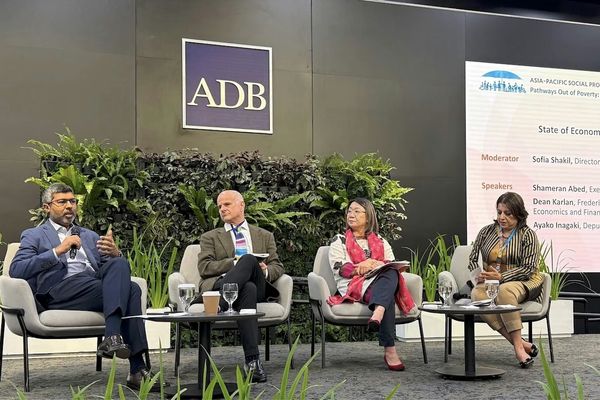
Socialprotection.org | Building pathways out of poverty in Asia: The future of Graduation is government-led, but not government alone
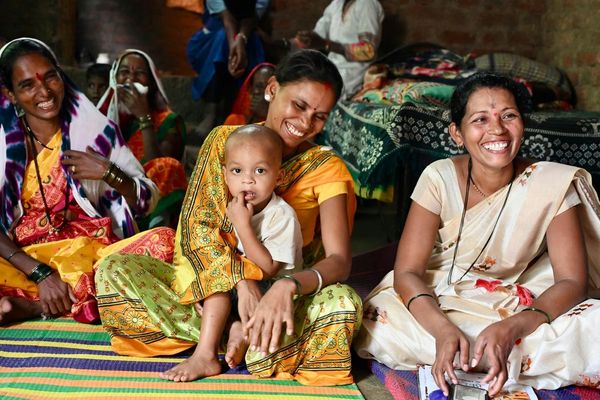
LSE: Empathy and soft skills are the driver of success in Graduation programs, yet do not get counted