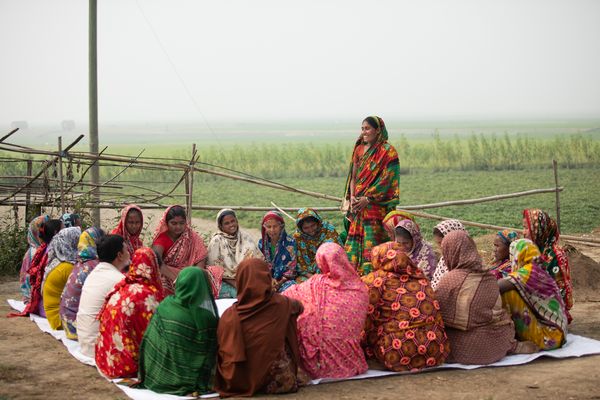
Bangladesh has cut poverty in half since 2000, but social development has not been uniform. Over 41.7 million people are still living in extreme poverty and one in four people across Bangladesh live in multi-dimensional poverty.
Many of these households are subjected to severe geographic, economic and social isolation where traditional development programming often struggles to reach. So the communities increasingly continue to remain left behind while the country moves forward.
BRAC focuses on enhancing economic well-being, supercharge agency, fostering social empowerment and improving access to critical services through women-led village development organisations. Through these organizations, we deliver tailored packages of essential services across the life cycle, such as health, nutrition, education and skills development, and connect communities to government support and private sector opportunities. We are also piloting home-based nutrition-sensitive food production, combining horticulture, aquaculture and fisheries.
Our work spans hard-to-reach areas across 16 districts of Bangladesh, including haors (wetlands), the Chittagong Hill Tracts and chars (river islands), the Barind tract as well as southern coastal areas.
We are also piloting an integrated approach to climate adaptation in climate-stressed areas of northwestern and southwestern Bangladesh, combining cross-sectoral training, farming input support, access to finance and creating market linkages to strengthen climate resilience.
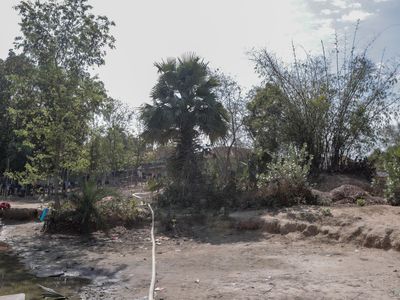
57%
income boost after receiving services in hard-to-reach areas
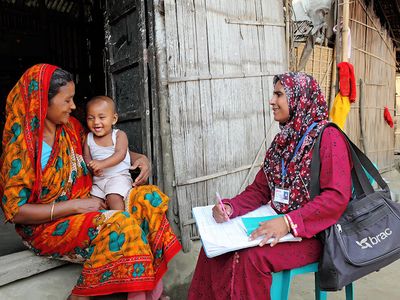
195,017
mothers and newborns received antenatal, neonatal and child healthcare services in 2024
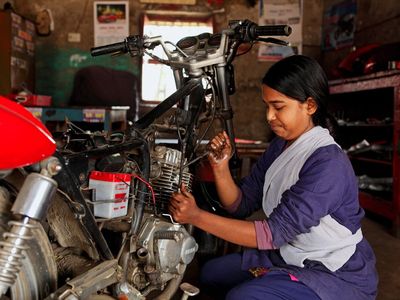
527
young people, 56% of whom are women, graduated as skills learners and secured job placements