
Canvases of Hope is a limited series pairing original artwork by artists in countries where BRAC works with the wisdom of our founder, Sir Fazle Hasan Abed.
Each piece is an invitation to our donors to pause, reflect, and remember the values that have guided BRAC from the beginning, and that members of our global community, like you, all share.
Below are the pieces in our three part series.
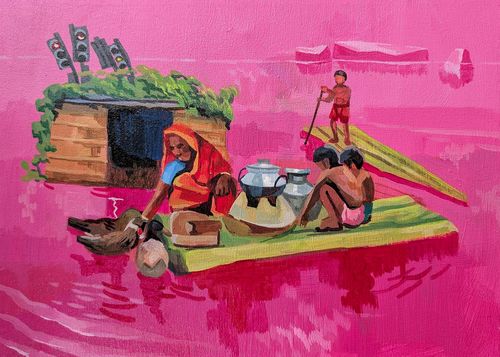
Don't ever lose sight of the mission to extend a hand to those who need it the most.”
Sir Fazle Hasan Abed
BRAC Founder
About the Artwork
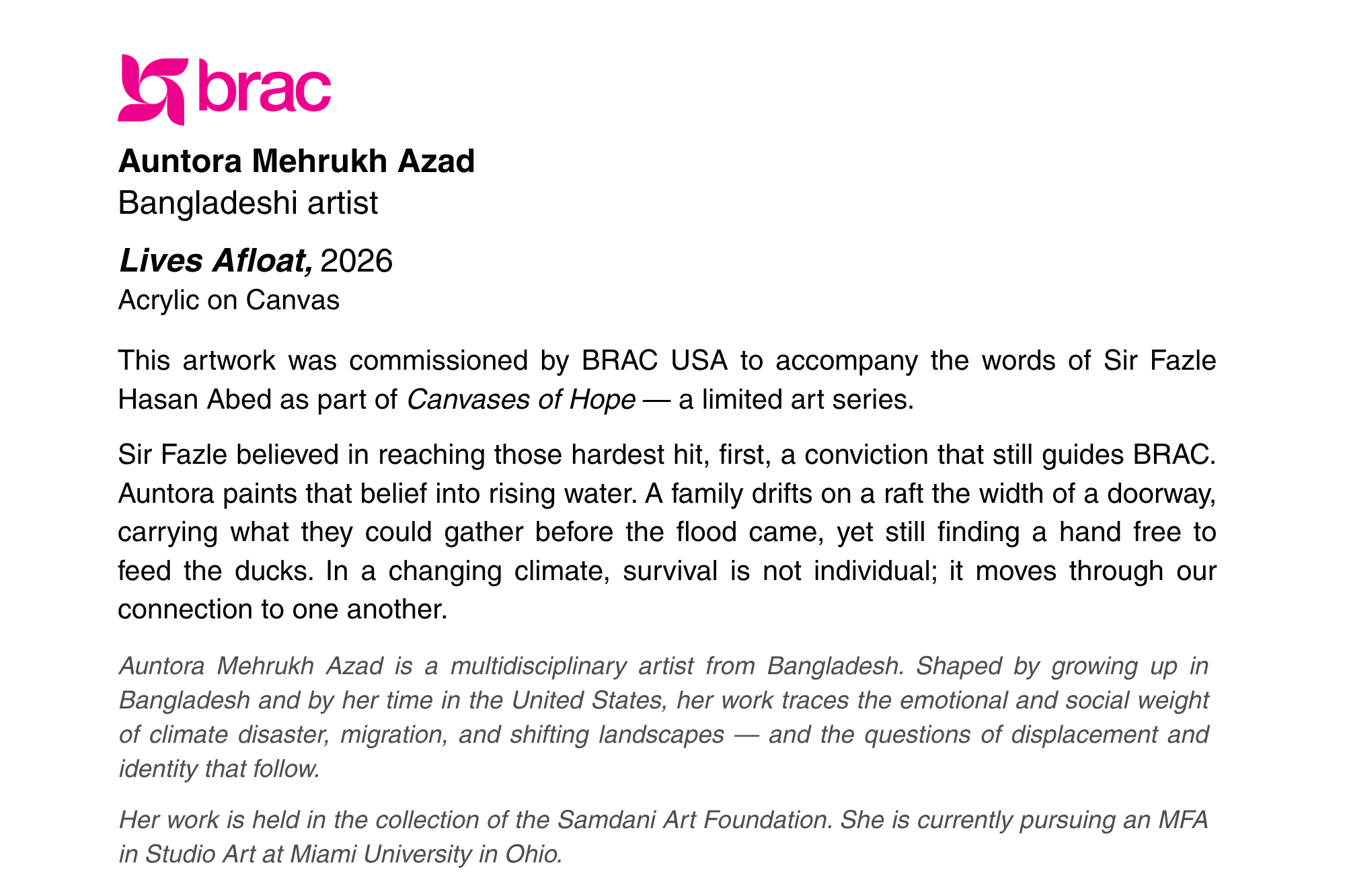
Lives Afloat, 2026
Artist: Auntora Mehrukh Azad (Bangladesh)
Acrylic on Canvas
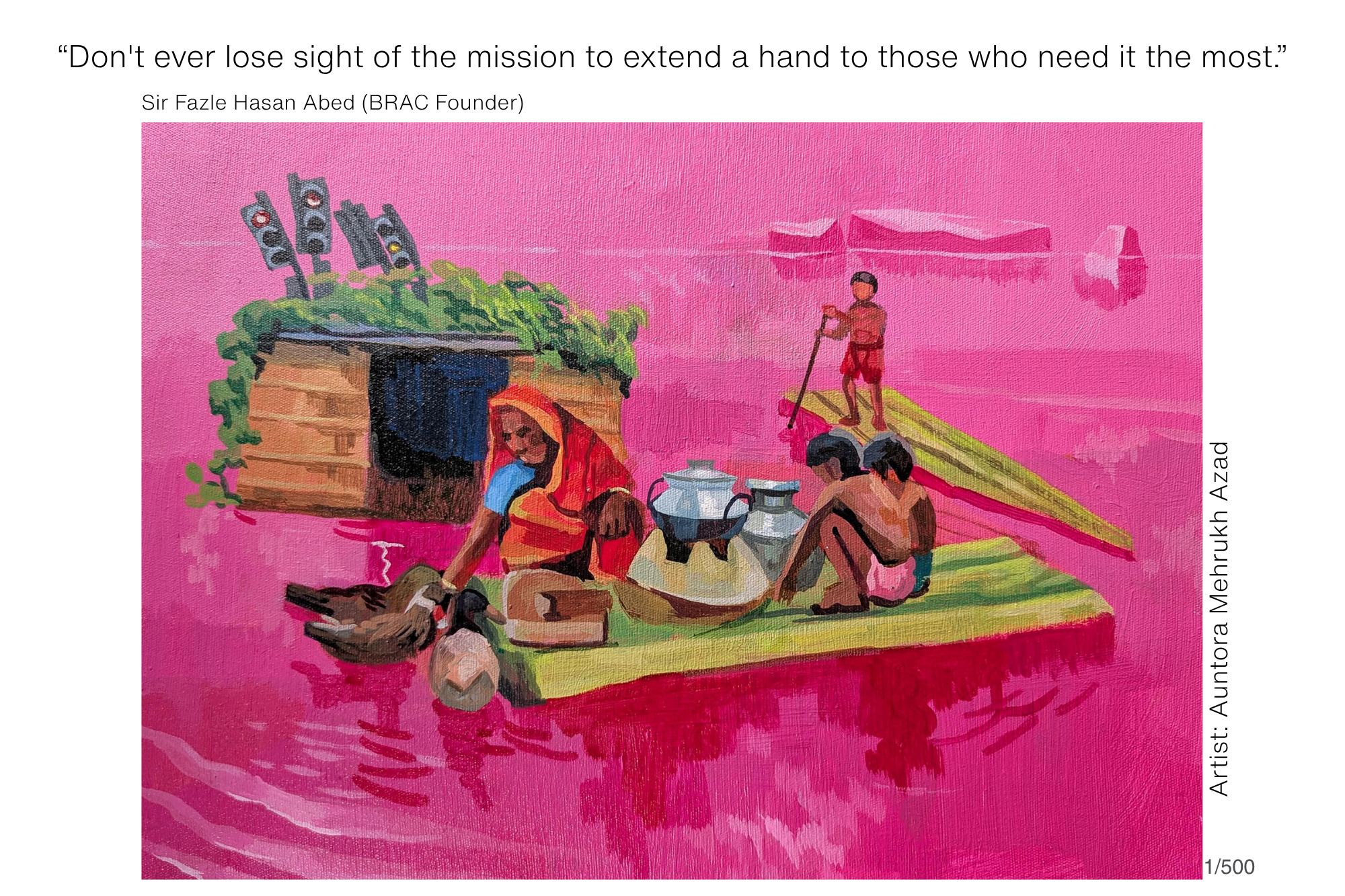
Inspired by Sir Fazle's reminder to extend a hand to those who need it most, this painting explores the bonds between people, animals, and the environments they share. By depicting both people and animals affected by flooding, Auntora draws attention to the interconnected nature of vulnerability and survival. In a changing environment, no one exists in isolation. Our well-being is bound to one another and to the world around us.
The idea behind the quote
For Sir Fazle Hasan Abed, extending a hand meant finding the people most often overlooked and building solutions with them, so they can rise up. That conviction continues to shape BRAC's work around the world. It's why BRAC:
- Operates schools for children in flood-prone communities where roads can't reach
- Supports families living in extreme poverty through its Ultra-Poor Graduation program, and
- Remains a leading provider of services to Rohingya refugees in Bangladesh nearly 10 years later
Across very different contexts, the mission is the same: to reach those furthest behind and help create a path forward.
Meet the Artist
About Auntora Mehrukh Azad
Auntora Mehrukh Azad is a multidisciplinary artist from Bangladesh currently pursuing an MFA in Studio Art at Miami University in Ohio. Her work explores themes of displacement, environmental vulnerability, memory, and cultural identity, drawing on her experiences growing up in Bangladesh and her life in the United States. Through vibrant colors and evocative depictions of changing landscapes, Azad examines the emotional and social impacts of climate change, natural disasters, and migration.
Her work has been exhibited in Indonesia, Thailand, and Japan, and her 2024 solo exhibition, Solastalgia in Dhaka, explored the grief and nostalgia associated with places transformed by environmental change.
Combining artistic expression with environmental advocacy, Azad's work invites reflection on our relationship with the natural world and the future of Bangladesh's changing landscapes.
In the artist's words
The quote makes me think about interdependence, looking after the one who is most vulnerable.
In this painting, I wanted to show not only humans affected by flooding, but also the animals that share their environment.
In a changing environment, survival is not individual, we are connected to one another, to animals, and to the environment around us.
About the piece
This artwork was created for BRAC USA and the limited series Canvases of Hope, inspired by the words of Sir Fazle Hasan Abed.
Learn more and get in touch
For social media visit Auntora on Instagram (@ auntora.mehrukh.azad) or https://platformsart.com/artist/auntora-mehrukh-azad/
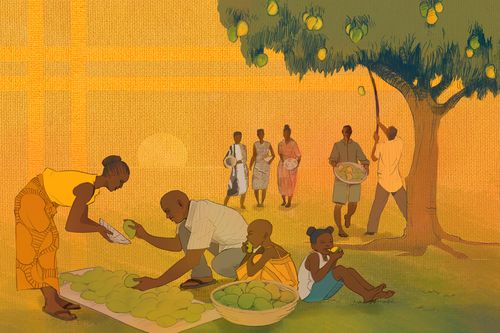
Poverty is not the absence of resources. It is the unequal sharing of them.”
Sir Fazle Hasan Abed
BRAC Founder
About the Artwork
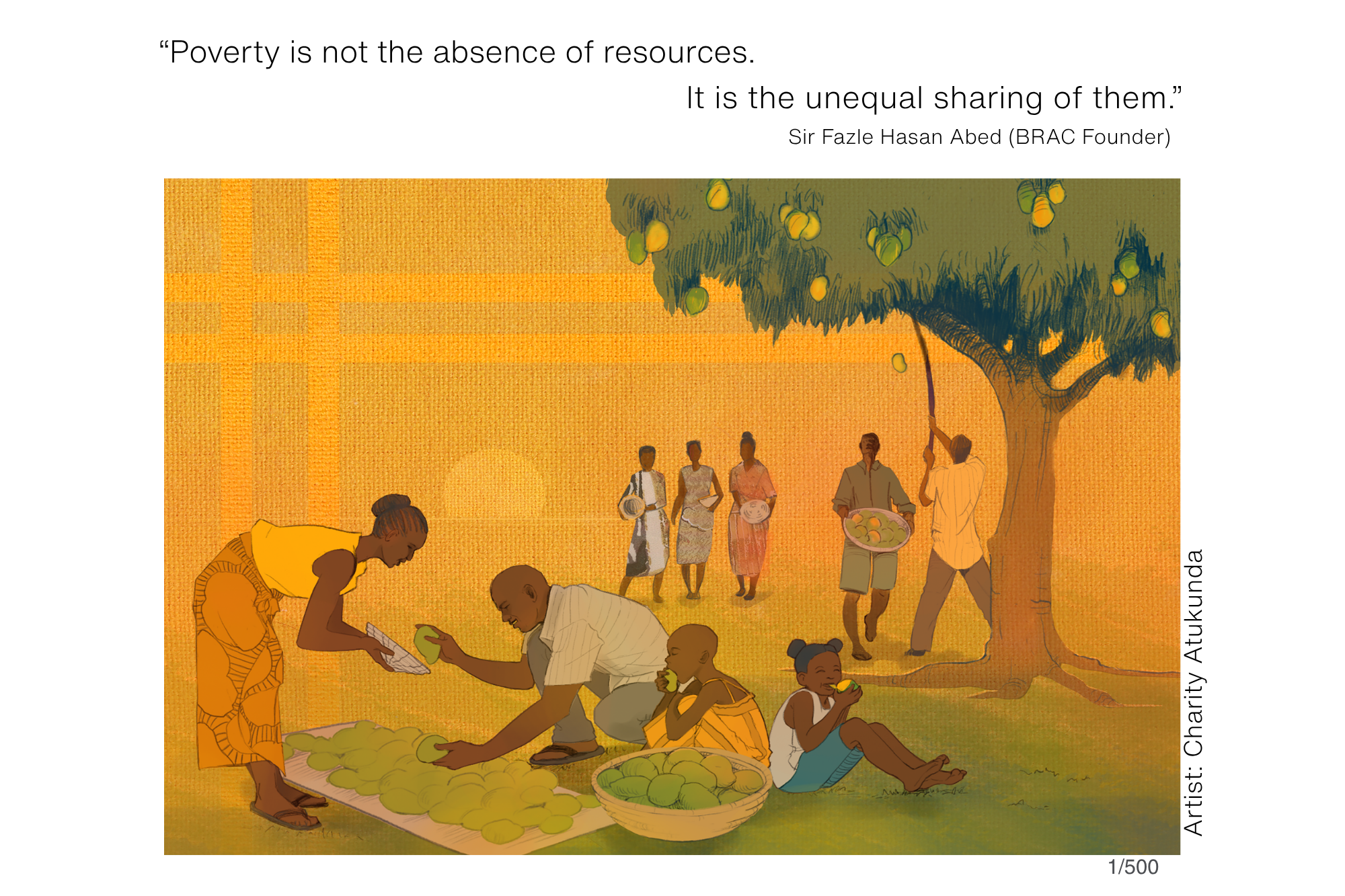
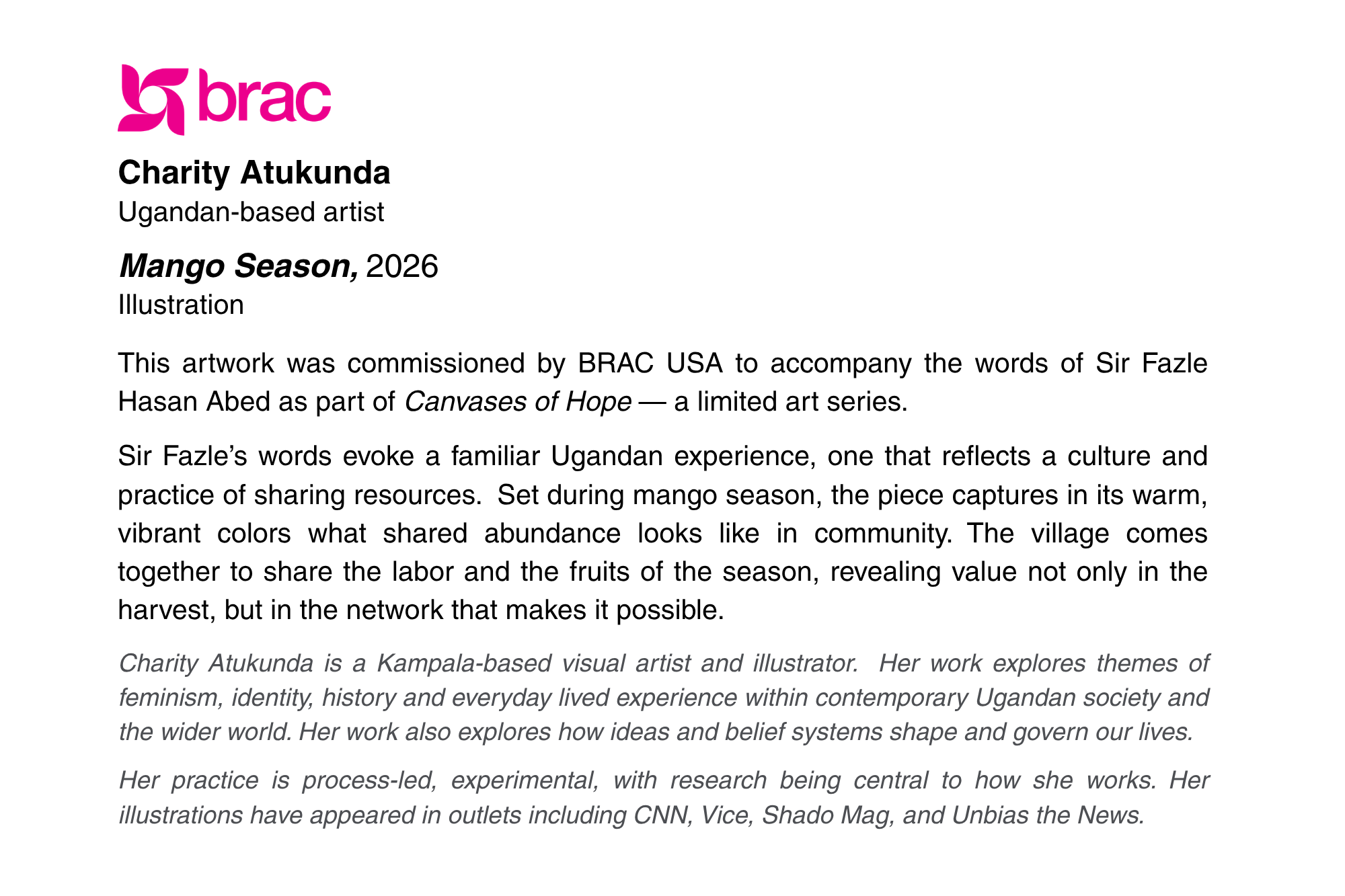
Mango Season, 2026
Artist: Charity Atukunda (Uganda)
Illustration
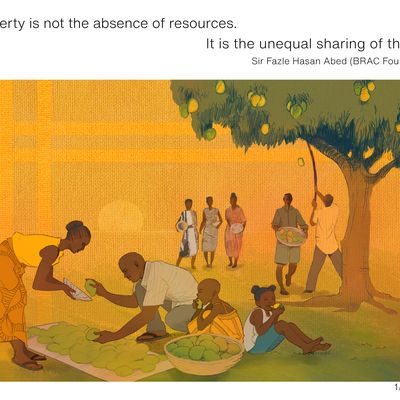
For this piece, Ugandan artist Charity Atukunda drew on a familiar scene from home: when a mango tree hangs full of ripe fruit, you call your neighbors, friends, and family to help harvest and share it. Set in mango season, her warm, textured scene turns Sir Fazle's words into an image of food as a communal resource, and of abundance that grows when it's shared.
The idea behind the quote
Sir Fazle believed that with the right assets and a community of support, everyone has the potential to rise out of poverty. BRAC's work has always tended to both:
- the tangible assets: cows, sewing machines, and cash
- the invisible safety nets that let progress continue long after a program ends
- the strengths already within a community, from local women who become teachers and health workers to the security of belonging to a savings group
Where others see scarcity, this piece sees abundance worth sharing.
Meet the Artist
About Charity Atukunda
Charity Atukunda is a Kampala-based visual artist and illustrator. Her work explores themes of feminism, identity, history and everyday lived experience within contemporary Ugandan society and the wider world. Her work also explores how ideas and belief systems shape and govern our lives.
Her practice is process-led, experimental, with research being central to how she works. Her illustrations have appeared in outlets including CNN, Vice, Shado Mag, and Unbias the News.
In the artist's words
Sir Fazle’s words reminded me of an experience most Ugandans share that demonstrates a culture and practice of sharing resources.
Set during mango season in Uganda, this piece captures in its warm, vibrant colors what shared abundance looks like at the community level.
The village comes together to share both the labor and the fruits of the season, revealing value in not only in what is harvested, but in the network of care that makes sharing possible.
About the piece
This artwork was designed for BRAC USA and the limited series Canvases of Hope, inspired by the words of Sir Fazle Hasan Abed.
Learn more and get in touch
For social media visit Charity on Instagram ( @charity.atukunda) or www.charityatukunda.com/

I have spent my life watching optimism triumph over despair when the light of self-belief is sparked.”
Sir Fazle Hasan Abed
BRAC Founder
About the Artwork
‘Cause I Let My Dying Petals Fall, 2023
Artist: Kakizi Jemima (Rwanda)
Acrylics on canvas
In this work, butterflies emerge from a woman’s face, a visual shift from heaviness toward possibility. It echoes Sir Fazle’s words about how self-belief can move people and communities beyond despair toward hope and opportunity.
The idea behind the quote
Across BRAC’s work, this belief shows up in quiet turning points:
- a mother begins to see herself as an entrepreneur
- a child steps into a classroom and imagines a brighter future
- a community facing crisis starts to believe in its power to recover and rebuild
The details change, but the heartbeat is the same.
Meet the Artist
About Kakizi Jemima
Kakizi Jemima is a multidisciplinary artist, curator, and advocate for contemporary women artists. Her contributions to the arts have earned her a nomination for the Forbes Women Africa Social Impact Awards in 2023.
Her journey is also featured in the book HER STORY, which highlights the narratives of 32 courageous and visionary women in Rwanda who have advocated and organized for women's rights throughout history.
In the artist's words
'Cause I let my dying petals fall' symbolizes a conscious choice toward resilience and courage. It reflects the belief that even in moments of heaviness, optimism can triumph over despair when the light of self-belief is sparked. The upward gaze suggests hope, while the butterflies embody the freedom that comes from trusting one’s inner strength and embracing change.
About the piece
This artwork has been exhibited in Seoul, South Korea (September, 2023) as part of 'African aurora' group exhibition at Gallery Desiego.
Learn more and get in touch
For social media visit Kakizi Jemima on Instagram (@kakizijemima)
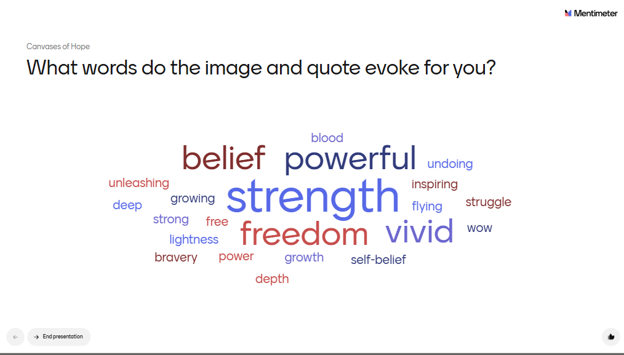
Add your word
Postcard 1
Community Word Cloud:
View the postcards
If you received a postcard in the mail, welcome. We're glad you're here.
-
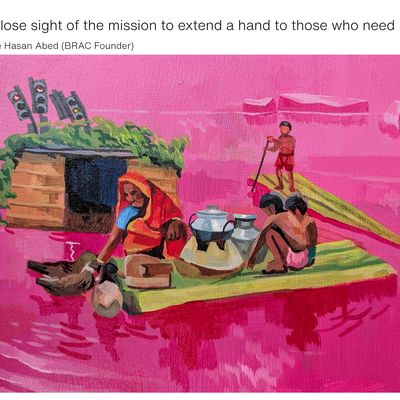
Front of postcard 3
A family huddled on a small raft as floodwaters rise around them. Even in crisis, they reach out to the ducks struggling in the water nearby. Auntora's work traces the emotional and social weight of climate disaster, and here she reminds us that we are all interconnected.
-
Back of Postcard 3
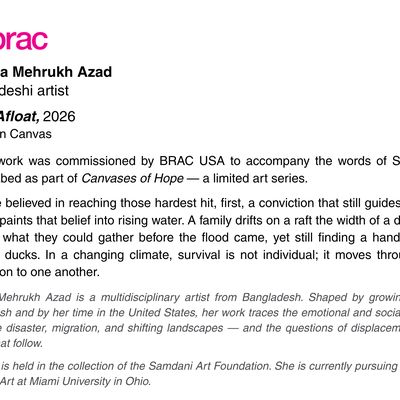
This artwork was commissioned by BRAC USA to accompany the words of Sir Fazle Hasan Abed as part of Canvases of Hope — a limited art series. Sir Fazle believed in reaching those hardest hit, first, a conviction that still guides BRAC. Auntora paints that belief into rising water. A family drifts on a raft the width of a doorway, carrying what they could gather before the flood came, yet still finding a hand free to feed the ducks. In a changing climate, survival is not individual; it moves through our connection to one another.
-
Front of Postcard 2
Charity Atukunda's Mango Season depicts a community coming together to harvest mangos
-
Back of postcard 2
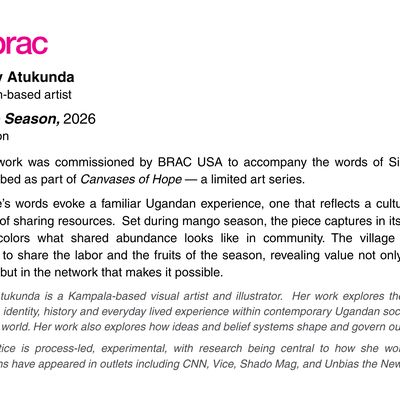
Learn more about the artwork and artist
-

Front of postcard 1
Kakizi Jemima's stunning painting of a woman's face and butterflies in motion is paired with a quote on self-belief from BRAC's founder
-

Back of postcard 1
Learn more about the artwork, artist, and series


We want to hear from you! What do you think of the series? Want to learn more? Missed the last postcard?
About the series
What is Canvases of Hope?
Canvases of Hope is a three-part art postcard series released across the year. Each piece pairs:
- An original artwork by an artist from a country where BRAC works
- A quote from Sir Fazle Hasan Abed that reflects BRAC’s founding values
We created this series because BRAC is often known through what can be measured: research, results, and scale. Those matter. But beneath the numbers is something steady: BRAC’s heart, and its belief in human potential, even in the toughest conditions.
Why art?
Art invites a different kind of attention. It can hold complexity, emotion, and meaning. It stays with us. And it has long been part of how people make sense of injustice, resilience, and change.
A limited three-piece series
Three pieces across the year. If you received a postcard, you’ll get a short follow-up email with the artist story.
The Artists
We are happy to compensate our artists through an honorarium. Please also visit their social media, engage, and follow them to support their incredible work.