
In the 1980s, BRAC worked to reduce the under-five mortality rate from diarrhea in rural Bangladesh by teaching mothers how to prepare oral rehydration therapy at home. At the time, the World Health Organization (WHO) thought the idea was dangerous.
But guided by evidence and a firm belief in the capacity of people, BRAC pushed forward.
At first, only 6% of the mothers we worked with could make the solution correctly.
But instead of giving up at the first sight of failure, BRAC’s team kept asking why, and kept improving their strategy. Soon, 18% of mothers were able to prepare the solution correctly, then 50%.

Over time, the formula—a fistful of sugar, a pinch of salt, and half a litre of water—became a household remedy across the country. By 2002, deaths from diarrhea in young children had dropped by 80%.
In development, success largely depends on people, relationships, evidence, and context—all of which need monitoring, evaluation, and often adaptation. Failure is often an inevitable part of the journey towards finding solutions that work.
BRAC has just published the sixth edition of our Failure Report. You can download it here, or keep reading for a sneak peek of the four stories featured. This year, three stories are from BRAC's work in Bangladesh, and one is from Uganda.
Failure #1: A digital health system forgot to center its users
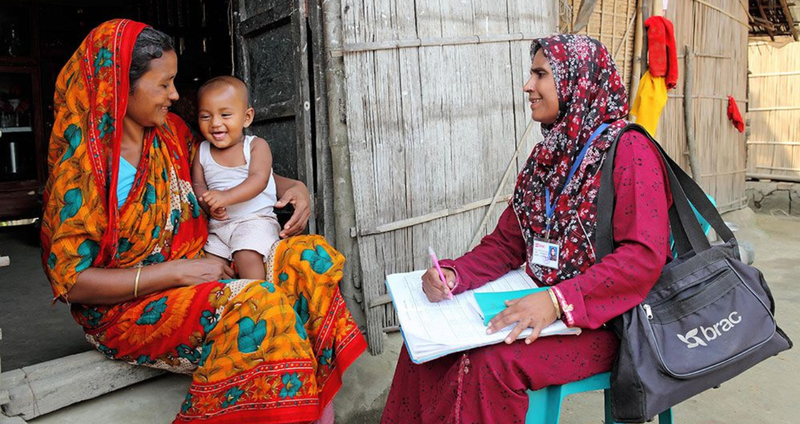
In 2021, BRAC’s Health Program piloted a digital data collection tool called mHealth. The goal was simple: help thousands of community health workers across Bangladesh spend less time on paperwork and more time helping individuals and families.
The idea was that they would use an electronic tablet in the field. It would eliminate the need to record paper records and enable more data-driven decisions.
But as the system grew, every department, from operations to research, wanted to add more data to track from individuals and households. This led to “mission creep” from the original reason for intervention. Soon, frontline health workers were entering more than 400 data points per household visit.
Many health workers didn’t have time to enter this volume of data during their home visits, so they entered it after working hours or the next day. This led to lower data quality, as some data or details were forgotten or missed.
Additionally, only a small slice of that data collected was reviewed or used. Health workers were buried in data entry. The time they saved on traditional approaches to data collection, like paperwork, was replaced with digital data collection.
In response, by late 2024, BRAC had cut the digital data system down to 280 data points, focused on what mattered most. The tool became more user-friendly, and data quality improved. Health workers had more time to deliver services and see more patients in a day.
Lesson learned: More data doesn’t always lead to greater insight. An effective tool has to be designed for the people who use it every day, not just for what looks impressive on paper. A digital system only works if the technology, people, and processes work well together.
Failure #2: A proven model quietly stopped working
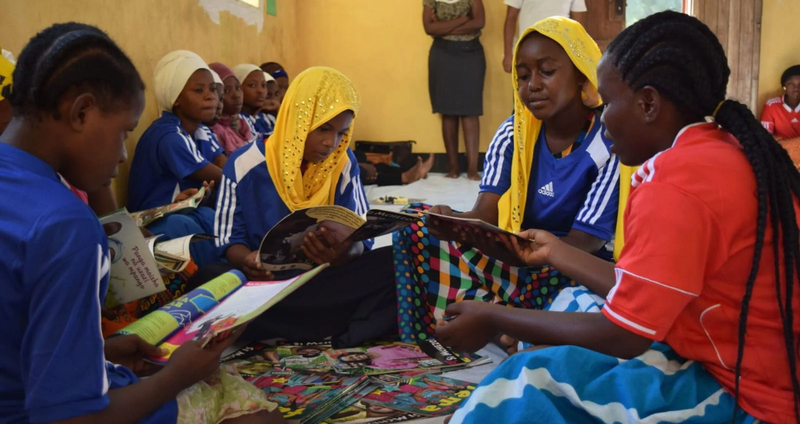
BRAC’s Empowerment and Livelihoods for Adolescents (ELA) began in Uganda in 2006. Girls and young women met in safe spaces to learn life skills and financial literacy from a “near peer” mentor. A major independent study found village-wide and cost-effective impact. The program raised incomes and cut teen pregnancy rates across entire villages.
So BRAC scaled. Over 1,800 additional clubs were formed across five countries, reaching 80,000 people.
But 10 years later, it became clear that something was off. Staff began receiving conflicting reports. Club sessions weren’t taking place five days a week as intended. The program was meant for girls who were out of school, but girls already in school were participating.
When staff checked in on clubs unannounced, they were shocked. More than half of the clubs had no mentor or no members. These “ghost clubs” existed on paper only.
BRAC rebuilt the program from the ground up. We started by convening parents, community members, and staff to identify current needs. The result was a new curriculum, real-time supervision, and a schedule that better fit girls’ lives. Reflection sessions are now built in to ensure program data is understood.
Today, the redesigned model is part of the Mastercard Foundation Accelerating Impact for Young Women in Partnership with BRAC program (AIM). By 2033, it will reach 2 million young women across seven African countries.
Lesson learned: Even a program backed by research can quietly get off track without close monitoring. Success once or in one location does not guarantee success forever, or in a different location. Curricula can become outdated quickly. Programs must be adapted to each local context, and they must be adapted as the context changes.
Failure #3: An innovative manufacturing solution never took flight
When COVID-19 hit in 2020, Bangladesh urgently needed personal protective equipment (PPE), but the global supply chain was months behind. So BRAC’s Social Innovation Lab established a network of local fabrication laboratories (known as “fab labs”) and makerspaces that could 3D-print and build gear on demand. The goal was to build a decentralized system that would serve communities long after the immediate crisis subsided.
It worked at first. In under six months, local makers produced over 3,300 face shields and mask holders for frontline workers. Prototypes met quality benchmarks, and there was a strong local demand. The product portfolio expanded from eight to 20 unique designs.
But when the team tried to turn this into a lasting business model that could sell products to local NGOs and businesses, they hit a barrier. Local makerspaces didn’t have the necessary documents to meet the rigorous procurement processes. The fab labs were legally barred from selling products as a grant-funded operation. No one had checked that detail early on in the process.
A separate legal entity could be created, but who would manage it? Would it be strategically sound? We didn’t have the answers to these questions, time to address them, or the resources to expand. So the grand plan ended here, with just a proof of concept.
Lesson learned: Enthusiasm is not the same as readiness. A concept can address a real problem, partners can be supportive, and early signals can be encouraging. But before scaling an idea, the surrounding systems, policies, and markets need to be fully understood and tested to ensure the model can succeed. Regulatory roadblocks can be expected, and alternative pathways are a must.

Failure #4: An ambitious plan for clean water didn’t get off the ground
In 2021, BRAC partnered with international water technology companies on a bold plan. “Safe Water for All” aimed to build treatment plants to clean toxic industrial waste produced by garment factories, and to deliver safe drinking water to coastal communities in Bangladesh.
In this area, access to both drinking water and water for household use varies widely. Some people have to walk long distances to collect it. Others can purchase drinking water closer to home through local entrepreneurs who run small water treatment plants using reverse osmosis.
This project wanted a larger-scale, eco-friendly tool that would provide more clean water to communities with less waste. The solution was a more efficient and advanced water treatment plant.
Thirty new treatment plants would provide access to safe and affordable drinking water to nearly 150,000 people, creating 300 jobs in the process.
But the plan ran into trouble from the start. There were import delays. The advanced water machines we planned to use were expensive and complicated to install. Entrepreneurs couldn’t secure financing. Local infrastructure couldn’t support the technology. Other clean water solutions were implemented, which made the investment even riskier for entrepreneurs.
In the three-month engagement and demonstration phase, 174 new water entrepreneurs were engaged, but no one placed an order for a machine. The project closed six months early, with zero machines sold to the entrepreneurs it was designed for.
Lesson learned: Strong technology and good intentions aren’t enough. If a solution doesn’t fit the local market, the financing available, and the people meant to use it, it will not succeed, no matter how good the intentions or how promising it seems. Local knowledge and experience must drive solutions.

BONUS: A past failure that went on to succeed
The 2026 Failure Report concludes with a revisit to a project in BRAC’s 2018 Failure Report called Shohochor, meaning companion or attendant in Bengali. It was a prototype to let BRAC staff buy and sell empty seats on the company’s fleet of commuter buses. When employees were on field visits or out of the office, their bus seats remained empty. Shohochor was designed to bridge this gap, giving their colleagues a dependable transport option into the office.
Back then, it failed because BRAC didn’t have the digital tools needed to manage it. At the time, registering for a bus route and designating vehicles for field visits were all done on paper. Scaling the model wasn’t possible, since seat matches, payments, and route coordination had to be done in near real-time across 44 routes, each carrying at least 20 passengers.
But years later, the right technology and digital systems were in place. So we tried again. Today, the service is up and running, with about 700 seats exchanged between staff every month.
Lesson learned: A failed idea does not always mean a bad idea. It doesn’t mean the end. Sometimes it just means the timing wasn’t right or the surrounding ecosystem wasn’t ready yet. Issues can be revisited and solved.

Read the full stories
How we respond to failure matters just as much as the failure itself. It isn’t something to hide. Failure is something to study so we can learn lessons, adapt, and scale the most effective solutions to eliminate extreme poverty around the world.
These snapshots are just a glimpse of what’s inside this year’s Failure Report. The full report goes much deeper into what happened, why, and exactly what BRAC will do differently going forward.