Breaking barriers: Anwar’s journey from isolation to inclusion
Anwar, a 7-year-old with an intellectual disability, living in D Block, Rohingya Camp No. 7, Kutupalong Union, Ukhia Upazila. Born to refugee parents who fled to Bangladesh in 2017, Anwar’s life has been marked by hardship and exclusion.
The severe conditions of the camp, combined with his disability, left him vulnerable and marginalized. Despite their unwavering love, his parents struggled to provide the necessary nutrition and medical care, further hindering his development.
Anwar’s early years were characterized by profound social isolation. His peers, uncertain of how to engage with him, often kept their distance.
The lack of accessible education facilities in the camp only deepened his exclusion, depriving him of opportunities to learn, socialize, and grow like other children.
His parents longed for a better future, where Anwar could receive both education and social interaction in an environment that understood his needs.
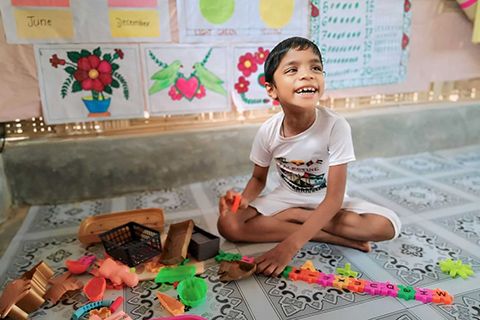
Before, I felt alone and different. Now, I have friends, and I love learning every day. Thank you for giving me a chance to be like everyone else.”
Anwar
In August 2023, a beacon of hope emerged.
Jugantor Samaj Unnayan Sangstha, in collaboration with BRAC, launched the Pooled Fund Education Project, designed to address the educational needs of Rohingya children, with a particular focus on inclusion and accessibility.
As part of this initiative, a learning center was established in D Block, offering children like Anwar a chance to integrate into an educational setting.
During the learner's survey, Anwar’s name stood out. His eagerness to learn and connect with others was evident, despite his disability.
He was soon enrolled in Grade 1, Shift 1, where the dedicated teachers provided tailored support, ensuring he had extra attention, additional time, and a prominent seat in the classroom.
However, the intervention extended beyond academics—it also fostered a culture of acceptance and inclusion among his peers.
Hasina’s journey to economic empowerment
Hasina, a 40-year-old refugee living in Camp 4 Extension, faced immense challenges as the sole provider for her two children.
After her husband, Mohammad Jaker, remarried and left, she struggled to cover expenses beyond the basic WFP support, including her son’s education, medical needs, and household essentials.
Determined to change her circumstances, Hasina attended a Community Consultation Meeting and was selected for the Sustainable and Inclusive Gender Equitable Livelihood Support Program under Shushilan. She participated in the 24-day Shital Pati Handicraft Training, equipping her with the skills to produce traditional mats.
As an active member of the Rainbow Self-Help Group (SHG), Hasina engaged with fellow artisans to explore marketing strategies and overcome challenges. She also received soft skills training on Gender-Based Violence (GBV), Protection from Sexual Exploitation and Abuse (PSEA), and child marriage awareness, further strengthening her resilience.
With the input support materials provided, Hasina put her skills into practice. She sold six Shital Pati mats for 6,200 BDT and completed five wage-based mats in 5 months, earning an additional 2,300 BDT.
Her earnings allowed her to cover her son's education costs, purchase medical supplies, and reinvest into further production.
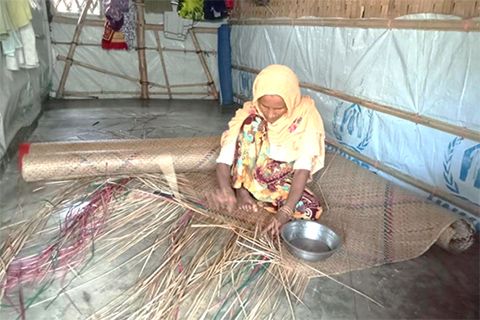
My daughter is 14 years old. I will not marry her off before 18 because she is too young to manage a family and could face serious health risks in childbirth. I am thankful to the BRAC Pooled Fund project and Shushilan for giving me this chance. I hope to improve my children's future by making Shital Pati and engaging in income-generating activities.”
Hasina
Hamida’s path to self-reliance
Fleeing Myanmar during the 2017 Rohingya influx, Hamida and her family arrived in Bangladesh on September 3, 2017.
Previously reliant on fishing and labour, they now reside in Camp 05, Block C1, with seven family members. The transition proved challenging, marked by food shortages and illness, until humanitarian organizations and the Bangladeshi government provided vital shelter, food, and aid.
Identified through the Pulse Bangladesh Society survey under the BRAC Pooled Fund Project, Hamida joined a vegetable cultivation initiative. After completing a three-day training on sustainable farming, she received agricultural supplies worth BDT 7,000, including seeds, bamboo, netting, and organic compost.
Working alongside her husband and daughters, she now grows vegetables around her shelter and earns approximately BDT 2,500 monthly. This additional income allows her to purchase medicine, clothing, and nutritious food.
Her hard work has significantly enhanced her family’s overall well-being and demonstrated how livelihood support can transform the lives of displaced communities.
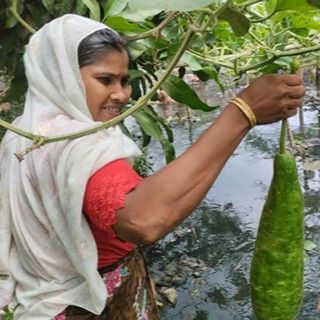
We are grateful for the assistance that has helped us start an income-generating activity. This opportunity brings hope for a self-sufficient future.”
Hamida