In today’s uncertain world, young people in the Global South are not waiting for change to happen. They are already leading it—in classrooms, in market stalls, in savings groups, and in their own homes.
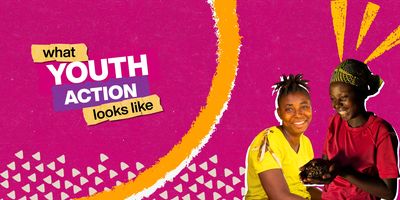
This International Youth Day, BRAC is running a campaign called “Youth Action Looks Like…” Instead of speaking about young people, they are picking up the microphone themselves. Five young leaders will share their hopes, ideas, and dreams for the future. They’ll also share how they are making change in their communities.
This learning brief is the companion to that campaign. It’s for the partners, funders, and policymakers who want to understand BRAC’s proven youth leadership approaches.
Young people have the solutions, and they're leading the change
Two out of every five people alive today are under the age of 25. Nearly 90% of them live in low- and middle-income countries. This is the largest generation of young people in human history.
Youth are concentrated in the places facing the steepest challenges: poverty, climate change, conflict, and limited access to education and dignified work. These barriers can create challenging transitions into adulthood.
BRAC's core belief is that young people are not simply passive recipients; they are drivers of change. When equipped with the right skills, tools, and opportunities, they can tap into their full potential. They can transform their own lives and communities.
This conviction comes from 40 years of testing, evaluating, and adjusting youth programs across Asia and Africa.
Four decades of testing what works
BRAC's work with youth began in Bangladesh and grew from there, refined through data at every step. Take a look back in time:
1980s, Bangladesh. BRAC introduces an informal primary education model at a time when 40% of Bangladeshi children of primary school age are out of school. Flash forward to today, and nearly 14.81 million children have graduated from BRAC schools (Source: BEP Statistical Report June 2026).
1990s, Bangladesh. BRAC launches an Adolescent Development Program to support girls who had dropped out before secondary school. It introduces safe spaces where they can socialize and learn.
2006, Uganda. BRAC opens its first 100 youth clubs, launching the Empowerment and Livelihood for Adolescents (ELA) model.
2008–2012, Uganda. A randomized controlled trial produces striking, village-wide results. A 48% rise in income generation, a 34% drop in teen pregnancy, and a near one-third drop in girls reporting sex against their will in villages with ELA clubs.
2008–2014, Africa. ELA expands to Tanzania, South Sudan, Sierra Leone, and Liberia. Research finds that the model does more than build skills in stable times; it protects girls during crises. In Sierra Leone, ELA participation offset most of the school dropout caused by the Ebola outbreak. In South Sudan, it protected girls from the educational fallout of continued civil conflict. The World Bank and USAID fund large-scale youth programs throughout Africa partly modeled on ELA. Learnings from years of implementing ELA eventually informed later BRAC youth programs.
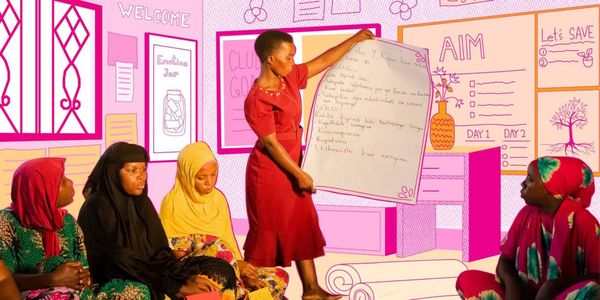
2021, Africa. Building on BRAC’s learnings from ELA, The Mastercard Foundation Accelerating Impact for Young Women (AIM) in partnership with BRAC program launches. It opens 660+ youth clubs across Liberia, Sierra Leone, Uganda, and Tanzania in the first year, reaching 70,000+ participants.
2024–2025, Africa. AIM's second year adds Rwanda and opens 2,000+ new clubs, reaching 200,000+ new participants.
2026 and beyond. BRAC and the Mastercard Foundation are using the evidence to redesign and scale AIM into its most ambitious phase yet, aiming to reach 2 million adolescent girls and young women by 2033.
BRAC's youth empowerment model isn't new or improvised. It is a continuously tested, ever-evolving approach. It has been refined over 40 years and across several countries. It keeps leading to the same pattern of results: greater confidence, income, and resilience in the youth who join in.
Two models, two continents, one theory of change
BRAC's youth programming today runs on parallel tracks in Bangladesh and Africa. The tools differ by context, but the underlying goal is the same. Each aims to build confidence and skills, connect young people to income generation, and change their environment so progress lasts.
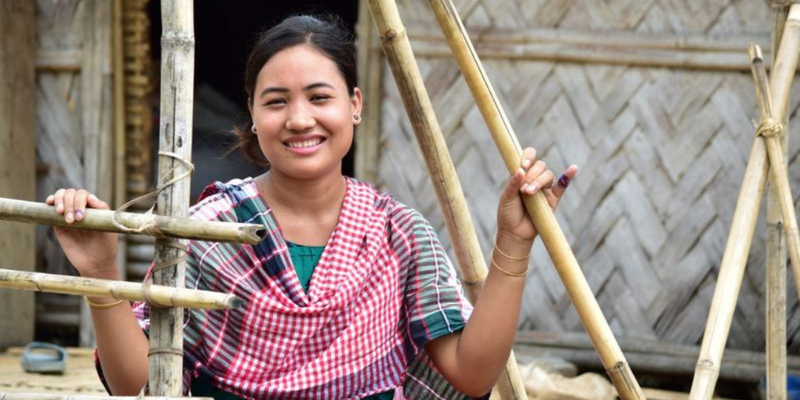
In Bangladesh, young people make up a third of the population. BRAC's youth program centers on civic leadership and community-driven change. Its flagship initiative is called the Amra Notun Network. Since 2018, the Amra Notun Network has graduated 2,122 participants—changemakers across 64 cohorts. They have gone on to lead 359 community projects on climate action, education, gender inclusion, and social justice (Source: Statistical Report June 2026).
The program focuses on empathetic leadership skills and character development. It trusts young people to identify the challenges in their own communities and design the response themselves. They are supported with the tools, training, and networks needed to build the future they envision.
Alongside this initiative, BRAC's STAR program addresses a stark skills gap. Ninety-six percent of people in Bangladesh lack the skills needed to take part in the country's production sector. STAR blends Bangladesh's traditional apprenticeship culture with modern vocational and digital skills training.
It has reached 570,000 people, more than half of them women. It has led to a 22.6% rise in labor market participation and a 78% increase in income-generating activities among trainees. Sixty-two percent of women trainees avoided early marriage.
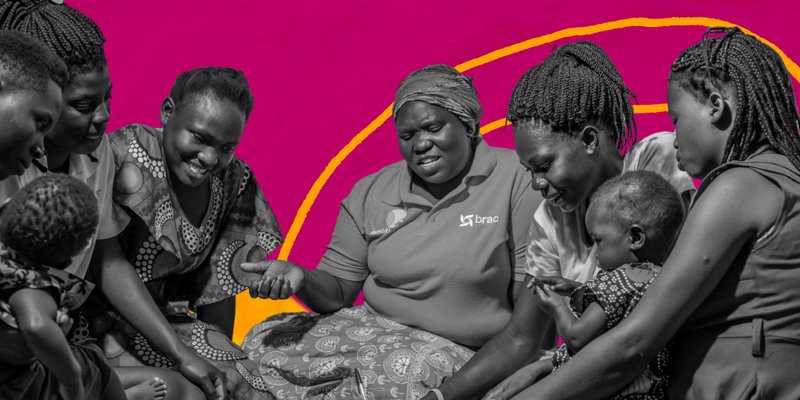
In Africa, AIM applies the same idea of empowering youth through a holistic approach. It combines youth clubs, near-peer mentors, life skills training, and links to microfinance and small business support. It’s also anchored in family and community engagement to make sure changes in a young person’s life are backed by the people around them.
The return on investment shown by the latest data
BRAC's Accelerating Impact for Young Women 2025 Learning Brief covers the program’s first two cohorts. It provides a current snapshot of what this model produces at scale.
Reach. From 2022 to 2025, AIM partnered with more than 2,600 communities. It formed over 2,800 youth clubs and reached more than 260,000 adolescent girls and young women and 60,000 adolescent boys and young men. More than 5,600 mentors were trained to support youth directly, and more than 3,600 savings groups were formed, drawing in over 53,000 participants.
Confidence and rights. Self-confidence among participants rose from 57% to 91.5% over the course of a cohort. Ninety-five percent of participants say they now feel more confident standing up for their rights. Nearly 89% say it’s now easier to access services like healthcare and protection from gender-based violence.
Income and livelihoods. Earned income rose 14.7% across all participants, with the largest gain (over 20%) among young women ages 18 to 24. Almost 60% of participants started a new business within one to two months of accessing support. More than 85% of those already running a business reported improvements after the program.
Other effects. Knowledge of family planning rose nearly 15%. In Sierra Leone, participants reported less violence in their communities since AIM began. In Uganda, younger participants reported a stronger desire to stay in school.
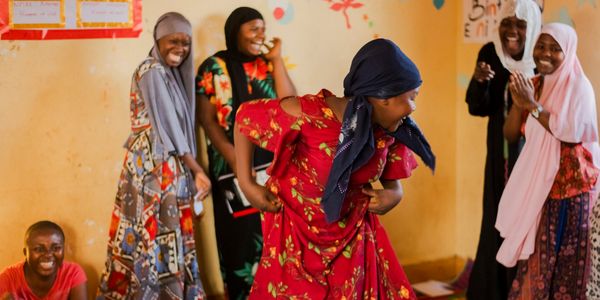
Behind the data are individual stories that reflect the return on investment. A 23-year-old in Rwanda who built a tailoring training center from a single sewing machine. A 25-year-old in Uganda who now leads a savings group of 47 women after leaving an unsupportive marriage. A mother in Liberia who, after losing her husband, is now raising pigs and rebuilding a life with her daughter.
Turning lessons learned into action
Based on the first two AIM cohorts, several learnings will be put into action:
- Extend the support window. A 12-month cohort period is too short to build a resilient microenterprise. AIM's next phase extends support to 24 months.
- Reach girls who are hardest to reach. Deeper community engagement is needed to drive changes in harmful norms and behaviors.
- Close service and referral gaps. Referral pathways to healthcare and protection services can be improved, especially in remote areas.
- Strengthen the bridge to formal education. Closer partnerships with schools are needed to help girls stay enrolled, or return if they've dropped out.
With these findings, the Mastercard Foundation and BRAC are scaling AIM into an expanded, redesigned phase. By 2033, the program aims to reach 2 million adolescent girls and young women across seven African countries. It also aims to support an additional 1 million students across 2,000 schools, engage 700,000 young women in microfinance groups, and reach 6.5 million community members.
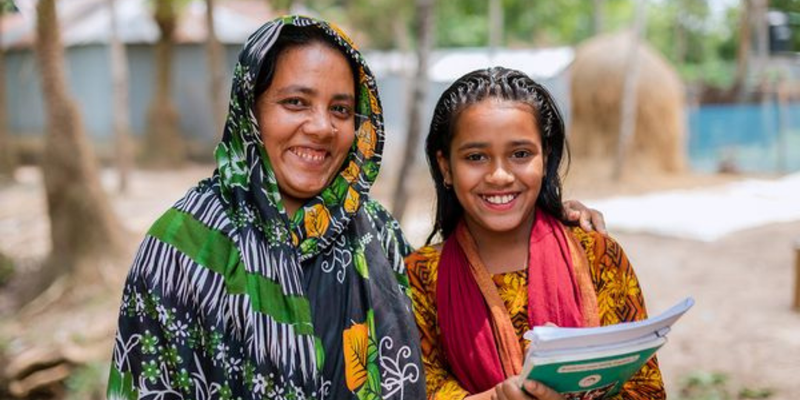
The case for trusting youth to lead
BRAC's “Youth Action Looks Like…” campaign this August is built on four ideas that the evidence supports:
- Youth leadership takes many forms. From grassroots organizing to entrepreneurship to mentorship, leadership is expressed differently across every community and context.
- Trusting youth creates thriving communities. When young people are trusted with leadership, communities grow stronger, more resilient, and more equitable.
- Young people understand their communities. They live the challenges. They know the solutions. Listening to them is not optional; it is essential.
- Investment in youth builds stronger futures. Investing in youth leadership today creates returns for everyone, for generations to come.
For too long, the development sector has spoken to young people rather than listened to them. BRAC’s work with youth is a four-decade, two-continent case study designed to reverse that. Young people have the potential to change their communities for the better. Our role is to listen to what they have to say.
Learn more about BRAC's youth programming across Asia and Africa. You can also explore partnership opportunities with BRAC USA.