The following excerpt is from a piece that originally appeared in CEOWorld Magazine. Read the full piece.
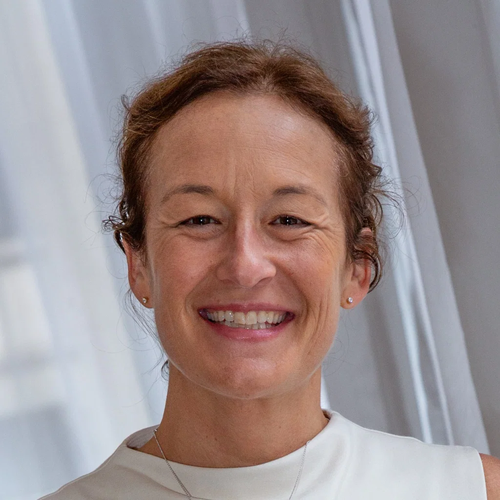
As President and CEO of BRAC USA, Roberts leads the U.S. affiliate of BRAC, the Global South-led development organization founded in Bangladesh more than five decades ago. What began as a small relief effort following Bangladesh’s war of independence has grown into a global organization whose education, healthcare and economic development programs have reached more than 145 million people.
For Roberts, joining BRAC represented both a return to where her career began and an opportunity to help shape what comes next for global development.
Returning to the community level
Roberts came to BRAC USA after 25 years of working globally, much of it focused on public health.
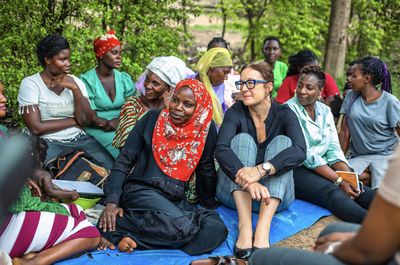
Her career began as a Peace Corps health volunteer in Guyana, where she worked at the grassroots level on vaccination campaigns and civil society engagement for HIV/AIDS prevention. She later spent two decades living in the Caribbean and working globally on health programming and systems change. As her career progressed, however, her work moved further from the direct, community-level delivery where she had started. Roberts wanted to get back to that foundation.
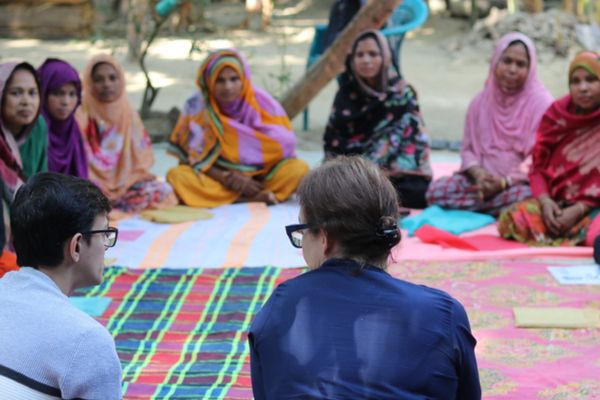
That made BRAC’s approach particularly compelling. Rather than simply delivering programs to communities, BRAC has built its model around the idea that people living in poverty can be agents of change in their own lives. Local voices help shape how programs are designed and delivered, while solutions are tested, adapted and scaled based on what works.
For Roberts, that proximity matters. It was one of the primary reasons she joined the organization.
Looking beyond a single problem
Her move to BRAC also reflected another lesson from her career in public health: improving health outcomes is critical, but health alone is not enough. Over time, Roberts came to see economic empowerment and social inclusion as a foundation for broader prosperity. She places particular importance on creating economic opportunities for women, who she says are more likely to make choices that benefit their families across nutrition, education and health.
That perspective also reflects BRAC’s broader approach to poverty. Its model recognizes that poverty is multidimensional and requires solutions that work across interconnected areas, including health, education, livelihoods, financial inclusion, climate resilience and gender equality.
BRAC has spent decades working across those areas, from microfinance and education to healthcare, climate adaptation, agriculture, youth empowerment and its Graduation approach to helping people escape extreme poverty.
Connecting U.S. philanthropy to proven solutions
Roberts now sees BRAC USA’s role as helping more U.S. partners and philanthropists connect with that work.
BRAC’s country teams lead the work, and BRAC USA plays an important role in attracting resources for programs designed and led from the community level, while amplifying BRAC’s programs, learnings and impact to new audiences.
That mission is becoming more important as the traditional architecture of global development changes. Bilateral aid has historically provided significant resources for development efforts around the world, but those funding streams are under growing pressure.
For Roberts, this moment presents an opportunity for philanthropy to think differently about how resources are deployed. Despite the disruption facing the sector, she sees opportunities to continue advancing global development goals by directing greater attention and resources toward approaches that have already demonstrated results.
BRAC is among the organizations Roberts believes already have proven, cost-effective solutions ready for greater engagement and investment. The opportunity for BRAC USA is to connect those solutions with U.S. partners and philanthropists looking to make a global impact.
A new role for collaborative philanthropy
One model Roberts believes could play a larger role in this next chapter is collaborative funding.
Organizations such as The Audacious Project and Co-Impact have demonstrated how funders can bring resources together behind opportunities for transformational impact.
BRAC has benefited from collaborative funding and also has the capacity to convene and steward collaborative funds of its own.
For years, the organization has worked with bilateral partners through approaches such as strategic partnership agreements, bringing funders together around a common strategy. Roberts sees an opportunity to bring that experience to private philanthropy.
With less bilateral funding available, BRAC is convening private funders around proven, cost-effective strategies, moving away from support spread across disparate partners, pilots and approaches and toward greater investment in scaling solutions that work.
That model also allows BRAC to play a dual role: bringing resources together while drawing on its own experience implementing programs on the ground.
Moving forward rather than freezing
The scale of today’s global challenges can make it easy to feel overwhelmed. Roberts describes it as a moment of “polycrises,” when the needs can seem so great that people may not know where to invest their energy or resources.
But Roberts believes there is reason to keep moving forward.
The work itself has not stopped. Communities remain committed to moving forward, meaningful progress continues and proven approaches are ready for greater investment.
For BRAC USA, the next chapter is about making those opportunities more visible and connecting more people in the United States with solutions that are already delivering impact around the world.
Taken together, Roberts’ career and BRAC’s history point toward a similar idea: listen to the people closest to the challenge, identify what is already working and give proven solutions the resources to go further.
At a moment when the scale of global challenges can make inaction feel tempting, Roberts’ message is ultimately one of optimism: progress has not frozen, and neither should those with the ability to help accelerate it.