The following is an excerpt from an article in Devex. Read the full article on their website.
At a dinner on the sidelines of a conference in Denmark, a senior Gates Foundation official raised the prospect of the coming wave of philanthropy from AI fortunes with Asif Saleh, executive director of BRAC, one of the world’s largest development nonprofits.
“She basically told me that you guys need to get ready for this, because this is big, and position yourself because we should try to get this money to people and organizations who are really ready to scale,” Saleh recalled of the conversation in June.
Just two months later, Saleh got a glimpse of just how fast that money could move. An anonymous donor gave BRAC two weeks to submit a concept note for a primary healthcare project that would make substantial use of artificial intelligence. BRAC’s proposal wasn’t selected but was told it could apply in future rounds.
“I didn’t realize that it would actually move so fast,” Saleh told Devex.
Now BRAC is making a pitch for how that emerging wealth could tackle one of development’s most stubborn challenges: extreme poverty. Its Ultra-Poor Graduation program combines help meeting basic needs with an asset such as livestock, training, and coaching to help families living in extreme poverty build sustainable livelihoods. BRAC wants philanthropists to help fund the training governments need to deliver the program to more families.
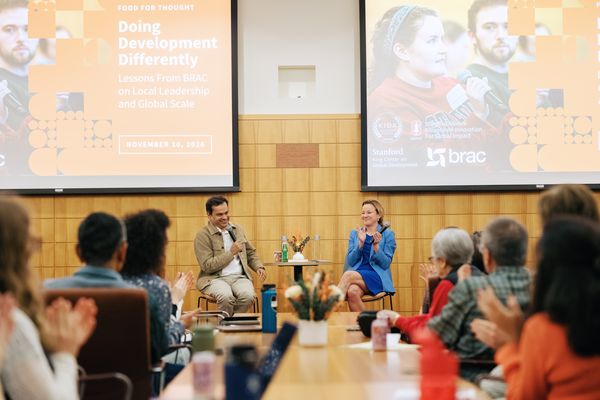
Saleh and Julia Roberts, president and CEO of BRAC USA, spoke with Devex during a Bay Area trip last week, where they were making the case for backing proven solutions at scale. They met with philanthropic advisers and family offices to discuss potential collaborations, gave talks at Stanford University and UC Berkeley, and discussed locally led development with members of Battery Powered, the giving program at San Francisco’s The Battery.
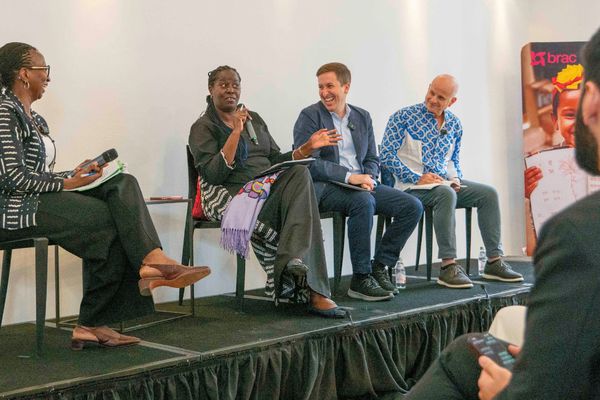
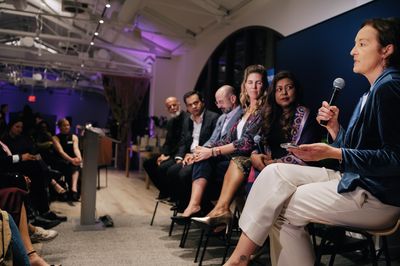
They also convened a conversation on “Building Things Worth Scaling,” where Christina Riechers of the OpenAI Foundation was among the speakers.
Roberts said conversations with funders have gathered momentum over the past six to eight months, with decisions being made more quickly. She sees this moment as a “bridge” to the third wave of philanthropy. One milestone arrives this week with Anthropic’s public listing, which could allow employees and other shareholders to turn some of their equity into cash they could give away.