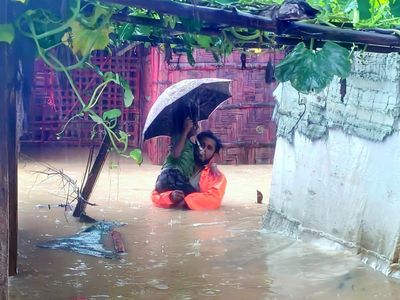
Since July 5, heavy monsoon rains have dropped 13.7 inches on the Rohingya refugee camps in Cox’s Bazar, Bangladesh, triggering flash floods and 74 landslides across one of the world’s most densely populated refugee settlements. The extreme weather has claimed at least ten lives, injured 88 people, and displaced 3,614 individuals, with soil erosion and widespread waterlogging affecting 20,448 residents.
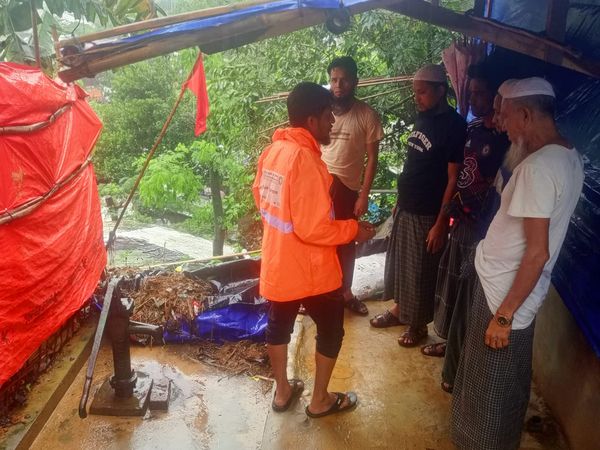
BRAC, which has more than 2,000 staff in Cox’s Bazar, is working closely with the Bangladeshi Government, United Nations, and other humanitarian partners in challenging weather conditions to support affected communities. Teams have relocated 1,665 people from high-risk areas to safer locations and cleared 818 meters of debris to reduce waterlogging.
On July 8, a landslide in Camp 5 struck a religious school as children were learning. Thirteen children have been recovered, but sadly five died, and eight are undergoing treatment.
“We are extremely devastated by the tragic loss of lives caused by the landslide that destroyed the madrassa this morning,” says Tanoy Dewan, Program Coordinator, Water, Sanitation and Hygiene, Disaster Risk Reduction, and Shelter, Camp Coordination and Camp Management. “The scale of this incident has shocked us all.”
The scale of this incident has shocked us all.”
Tanoy Dewan
BRAC's Program Coordinator, Water, Sanitation and Hygiene, Disaster Risk Reduction, and Shelter, Camp Coordination and Camp Management
While similar incidents have occurred recently in different parts of the camp, none have resulted in such a devastating number of casualties. “Our main priority is to support the affected families and stop such tragedies from ever happening again,” he says. “Starting tomorrow, we will conduct urgent assessments of other facilities and close any facilities identified as unsafe to prevent further tragedies and protect residents.’’
Widespread damage across the camps
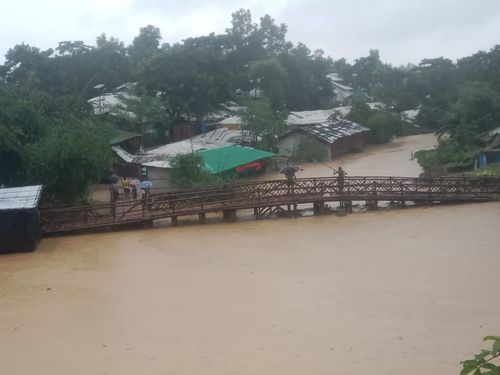
The camps are home to more than one million Rohingya refugees, and stretch over the region’s hilly terrain in south-east Bangladesh. The camps are built to sustain usual monsoon rains. However, during extreme monsoons, like the ones impacting South Asia at the moment, the community’s steep slopes and closely built shelters leave little room for flood waters to safely drain, making them vulnerable to flooding.
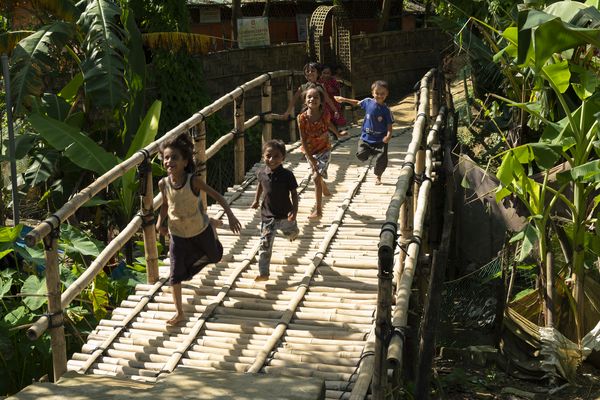
The rains damaged or destroyed more than 2,187 shelters, and damaged 34 learning centers, 603 retaining walls, 91 stairways, 112 pathways, 8 bridges, and 13 roads. Thirty-three water points, and 147 toilets are also damaged. The most severe impacts were felt in Camps 11 and 15 in Ukhiya, where landslides claimed several lives. The Rohingya Coordination Platform recorded 224 weather-related incidents (including 122 windstorm events and 16 floods) through July 8, affecting 4,242 households.
BRAC’s emergency response
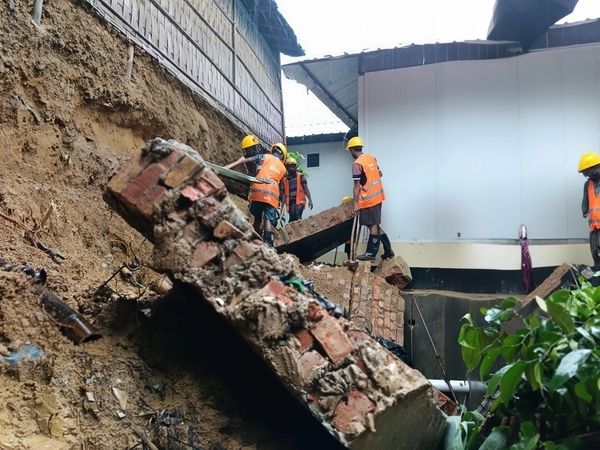
BRAC counts more than 2,000 staff in Cox’s Bazar. Teams are working closely with the population to understand their immediate needs, while providing regular services when possible. So far BRAC teams have:
- Relocated 1,665 displaced people from high-risk areas to safer locations
- Ensured emergency food assistance for displaced families, in coordination with World Food Programme
- Assessed damages to shelters and coordinating repairs
- Cleaned debris from 818 meters of drainage to reduce waterlogging and improve stormwater flow
- Repaired damaged latrines
- Distributed water purification tablets, Aquatabs, across three camps
Staff continue to assess risk areas and structures, identifying damages, and prioritizing urgent, temporary support to mitigate damage risk. Teams are monitoring damaged water and sanitation facilities to restore essential services.
Continued risk as monsoon season persists
The community is not yet out of harm’s way, with a three-day forecast calling for heavy rains. According to the Bangladesh Meteorological Department (BMD) and the BMD-FAO Landslide Forecasting System, between 6 to 15 inches (150–380 mm) of rain could impact Cox’s Bazar in that time.
As Bangladesh’s Meteorological Department continues to monitor active monsoon conditions in the region, the risk of further landslides and flooding remains high across Ukihya and Teknaf. BRAC will continue to work alongside the Government of Bangladesh, the Refugee Relief and Repatriation Commissioner, and fellow humanitarian partners to support the Rohingya refugees.
About BRAC’s work with Rohingya communities
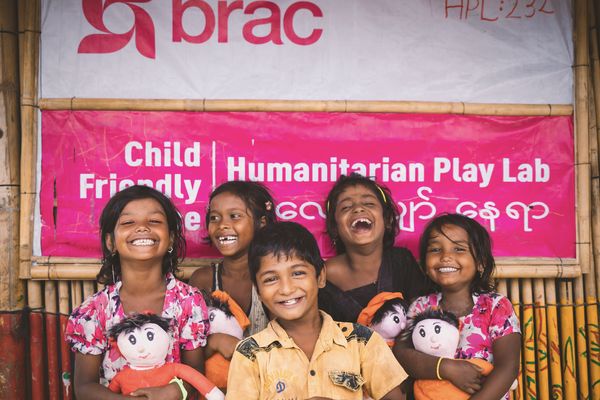
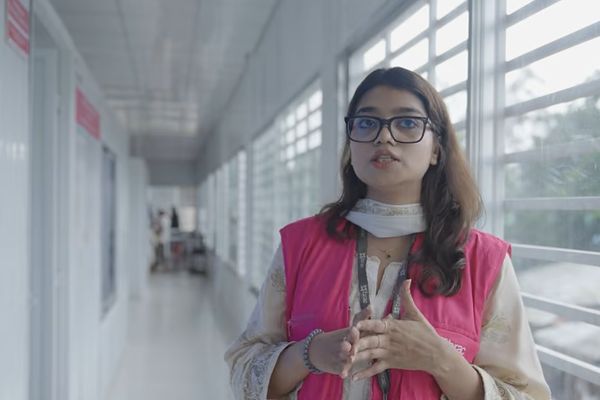
BRAC has worked in Cox’s Bazar for decades, and alongside Rohingya communities as they arrived in droves in 2017. Today, teams provide Rohingya and host community members access to integrated programs in health, education, protection, livelihoods and skills development, and disaster risk reduction. As of November 2025, BRAC’s health facilities had delivered 2.8 million outpatient medical consultations, and 980,000 children had accessed basic education in the camps and host communities.
Send your support to Rohingya refugees
Since July 4, extreme monsoon rains in the Rohingya refugee camps in Cox's Bazar have triggered floods and landslides. The storms have caused 15 deaths, displaced 4,307 people, and damaged 2,809 shelters. Soil erosion and waterlogging have affected 26,119 residents. BRAC's 2,000+ staff are responding. Please donate today.